The Encyclopedia of Oklahoma History and Culture
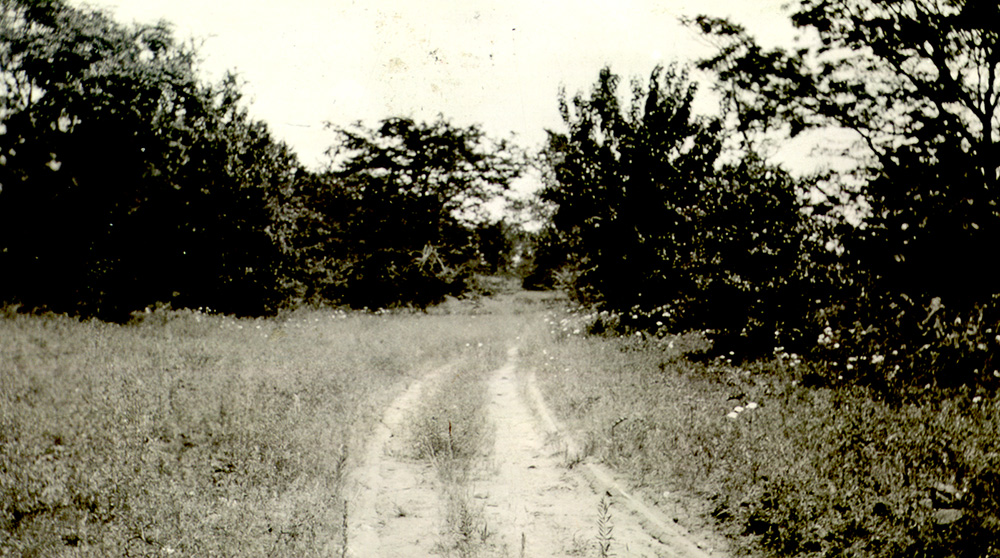
(1448, Muriel Wright Collection, OHS).
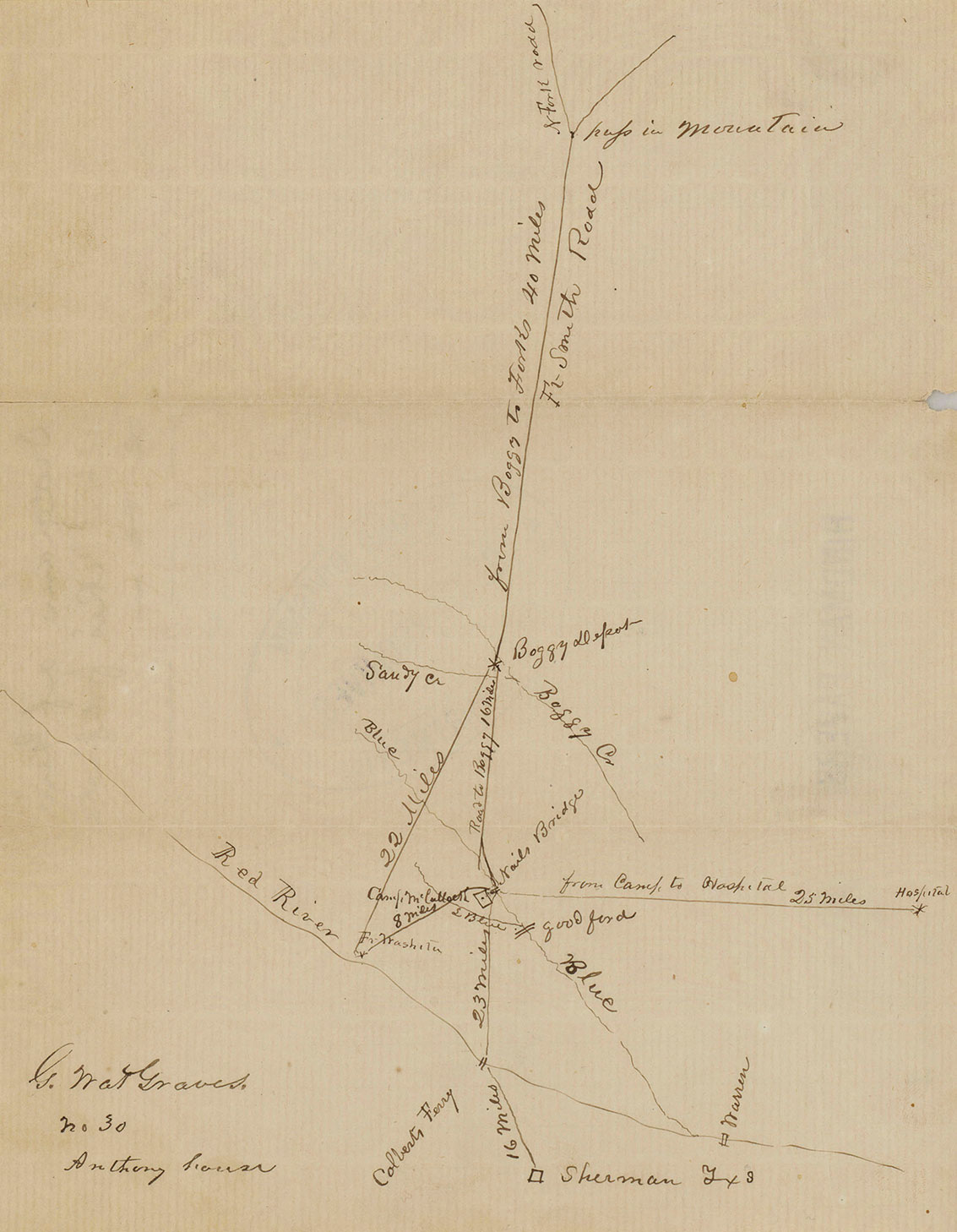
(image courtesy of the National Archives, Record Group 109, Confederate Records, maps, 70653039).
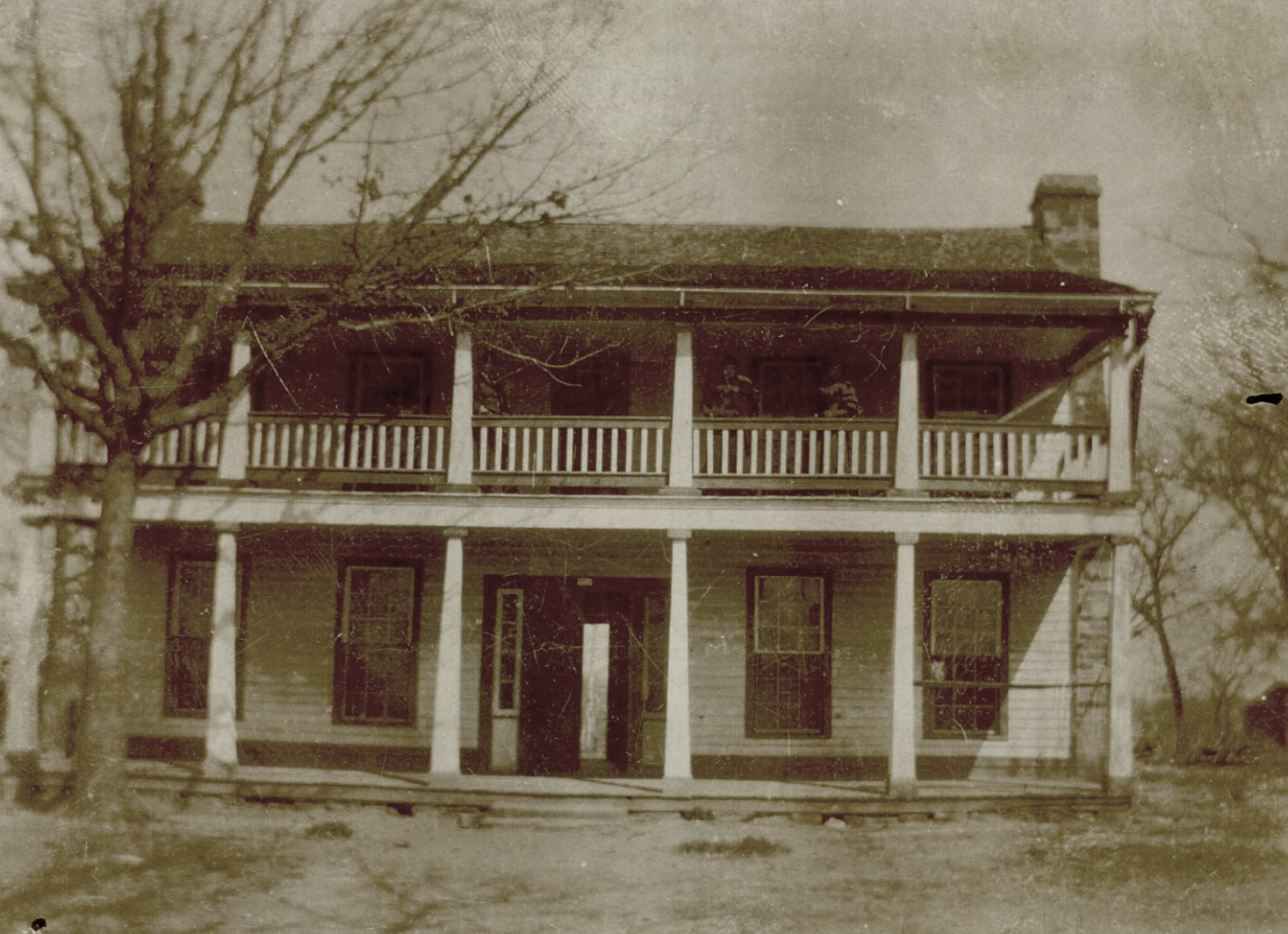
(13728, Oklahoma Historical Society Photograph Collection, OHS).
BOGGY DEPOT.
An important town in the Choctaw Nation, Indian Territory, Boggy Depot (sometimes called Old Boggy Depot) was situated between the Clear Boggy and Sandy creeks, fourteen miles southwest of present Atoka in Atoka County. Founded by Chickasaw Indians in 1837, it stood along the Texas Road and a trail that led from Fort Smith, Arkansas, to Fort Washita and was a station on the Butterfield Overland Mail route. Boggy Depot's post office opened in 1849, and the local newspaper was the Choctaw and Chickasaw Observer.
Boggy Depot was the location of the first Chickasaw agency in the West and served sometimes as the capital of the Choctaw Nation from 1858 to 1860. During the Civil War it housed the principal Confederate supply depot in Indian Territory. After the war a flour mill and a cotton gin operated northeast of town, and a salt works was established along nearby Salt Creek.
The Missouri, Kansas and Texas Railway bypassed Boggy Depot in 1872, prompting businessmen and residents to relocate to Atoka. Others moved two miles south and founded New Boggy Depot (present Boggy Depot). Nothing remains of Old Boggy Depot except its cemetery, where Choctaw chief Allen Wright and Rev. Cyrus Kingsbury are buried. The townsite, presently located in Boggy Depot State Park, is listed in the National Register of Historic Places (NR 72001050).
See Also
Learn More
"Boggy Depot," Vertical File, Research Division, Oklahoma Historical Society, Oklahoma City.
John W. Morris, Ghost Towns of Oklahoma (Norman: University of Oklahoma Press, 1977).
Muriel H. Wright, "Old Boggy Depot," The Chronicles of Oklahoma 5 (March 1927).
Muriel H. Wright and LeRoy H. Fischer, "Civil War Sites in Oklahoma," The Chronicles of Oklahoma 44 (Summer 1966).
Citation
The following (as per The Chicago Manual of Style, 17th edition) is the preferred citation for articles:
Jon D. May, “Boggy Depot,” The Encyclopedia of Oklahoma History and Culture, https://www.okhistory.org/publications/enc/entry?entry=BO002.
Published January 15, 2010
Last updated March 1, 2017
© Oklahoma Historical Society