Cherokee Strip Museum and Rose Hill School
The mission of the Cherokee Strip Museum and Rose Hill School is to collect, preserve, and interpret the history of the Cherokee Outlet. Visitors can explore life in early Oklahoma from the 1893 opening of the Cherokee Strip to the 1930s through museum exhibits, a 1895 one-room schoolhouse, a blacksmith shop, farm implement building, and outdoor exhibits.
The museum offers rotating exhibits, family-friendly events, and hands-on blacksmithing demonstrations.
The Cherokee Strip Museum and Rose Hill School is an affiliate of the Oklahoma Historical Society, operated in partnership with the Cherokee Strip Historical Society. Visit cherokee-strip-museum.org or find us on Facebook to learn more.
A Day at Rose Hill School
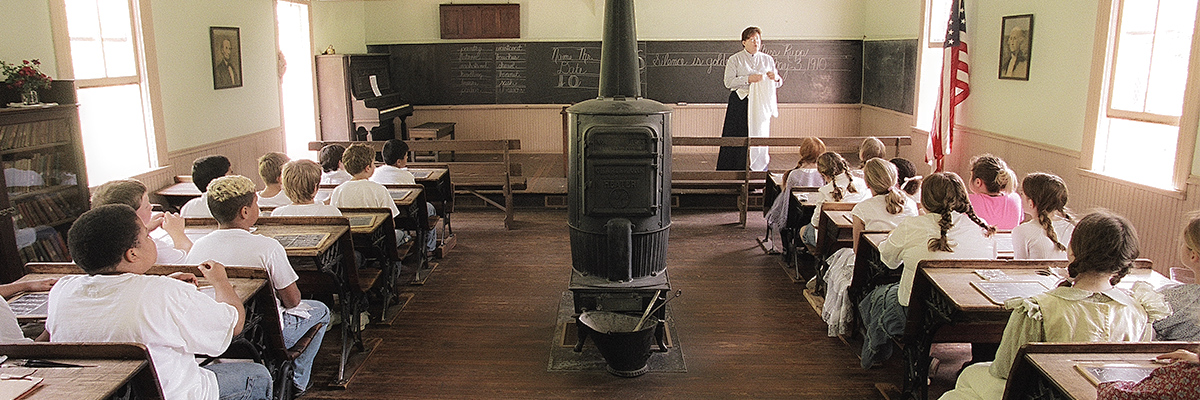
Located on the grounds is a one-room schoolhouse where we conduct the award-winning living history program A Day at Rose Hill School. Throughout the school year, third- and fourth-grade students from across the state can experience a school day set in 1910 rural Oklahoma. The educational program is offered through a partnership between the Oklahoma Historical Society and the Cherokee Strip Historical Society. Learn more about A Day at Rose Hill School.
Cherokee Strip History
In the 19th century, the US government removed American Indian nations from across the country to Indian Territory. During removal, part of the northern portion of present-day Oklahoma was given by treaty to the Cherokee Nation as a “perpetual outlet west.” Officially called the Cherokee Outlet, the region became known as the Cherokee Strip. Eventually, the federal government relocated Native nations such as the Osage, Kaw, Ponca, Pawnee, Nez Perce, Otoe-Missouria, and Tonkawa to the eastern part of the Cherokee Outlet.
After the Civil War, Texas cattlemen drove herds to railheads in Kansas for shipment to northern cities. By leasing the excellent grasslands in the outlet to the Cherokee Strip Livestock Association, the Cherokee made a profit on their western lands. Pressure from boomers forced the Cherokee to sell the land to the federal government for $8,505,736, or about $1.40 per acre. The government then opened the area to homesteaders.
The land opened at noon on September 16, 1893, in the largest land run in history. By horse, train, wagon, and on foot, more than 100,000 land-hungry pioneers raced for 40,000 homesteads and the valuable town lots. The Cherokee Strip Museum and Rose Hill School provides an opportunity to explore the remarkable events and people who shaped the history of the Cherokee Outlet.
View Collections Online
Discover postcards and photographs from the Cherokee Strip Museum and Rose Hill School collections on The Gateway to Oklahoma History.