Fort Towson Historic Site
Doaksville
Doaksville is an interpreted archaeological site operated by the Oklahoma Historical Society. Major archaeological investigations in 1995, 1996, and 1997 revealed the limestone foundations of multiple structures, including wells, jail, store, hotel, along with thousands of artifacts. A walking trail loops around the stabilized masonry ruins, and signage interprets the history of Doaksville and its multicultural residents.
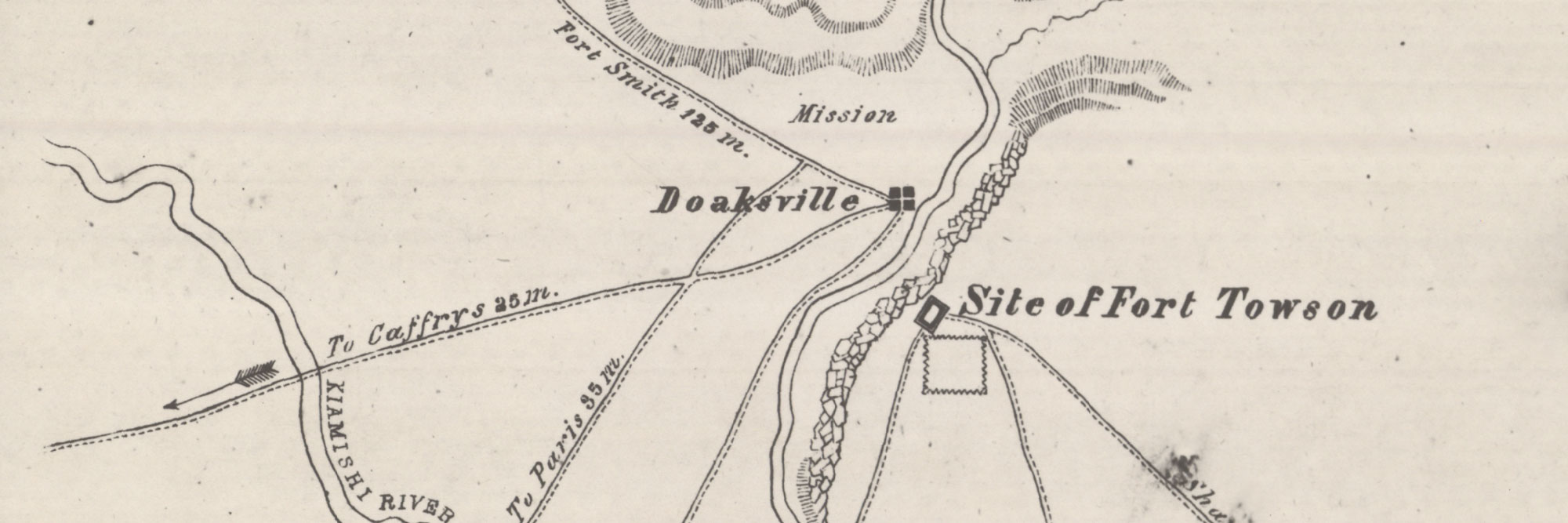
The Doaksville archaeological site provides a glimpse of the diverse historic and cultural past of southeast Oklahoma. Here, a trading post was established during the early 1820s by Josiah Doak. With the signing of the treaties of Dancing Rabbit Creek and Doak’s Stand, Doaksville became a major destination in what later became known as Indian Territory. With the military post nearby at Fort Towson for protection, Doaksville became the largest town in Indian Territory in 1850 and the commercial center of the Choctaw Nation.
Commerce grew with the establishment of the roads built to supply Fort Towson. These roads connected this region to metropolitan areas such as Fort Smith, Arkansas, and Fort Jessup, Louisiana. In the late 1830s steamboats traveled the Red River, carrying goods to Doaksville and agriculture products out of the region. At its height in the 1840–50s, the town boasted more than 30 buildings, including stores, a jail, school, hotel, and two newspapers.
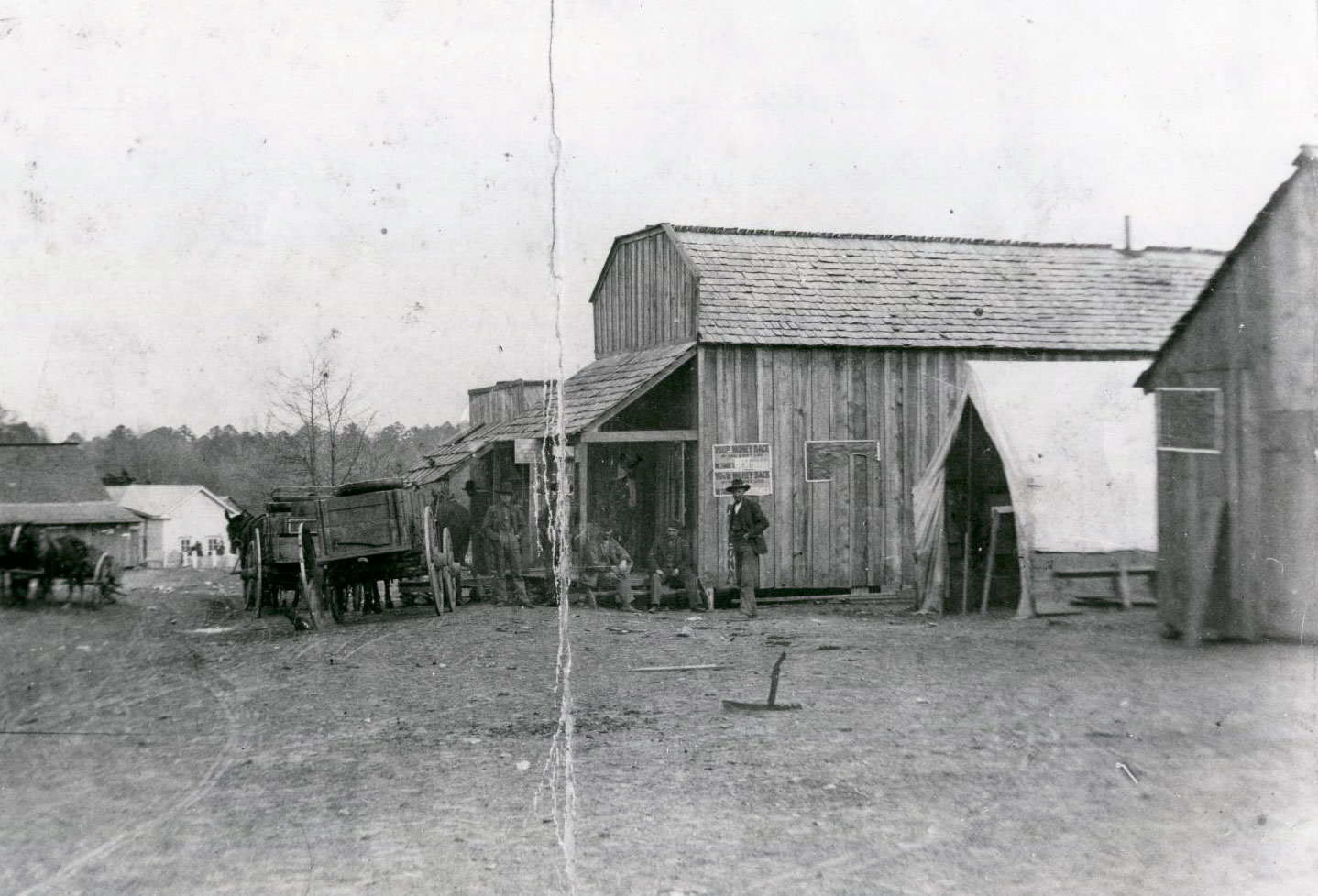 Doaksville, c. 1895–1899 (11381.A, Francis Inman Collection, OHS).
Prosperity and location allowed Doaksville to become the political center and then intermittently capital of the Choctaw Nation after 1850. In 1837, the Choctaws and the Chickasaws signed the Treaty of Doaksville, which allowed the Chickasaws to lease the western-most portion of the Choctaw Nation for settlement. In 1855, US government officials, Choctaws, and Chickasaws created a separate district for the Chickasaw people. A constitution was drafted there in 1858. In 1859 the Choctaws moved their capital west to Mayhew Mission and then to the present location at Tuskahoma.
Doaksville’s decline began with the abandonment of Fort Towson in 1854. The Civil War in Indian Territory devastated the region’s plantation-based economy. On June 23, 1865, the last Confederate general, Stand Watie, surrendered his Indian Division to Union forces near Doaksville. The town declined in importance in the late 1800s, and the final blow came in 1870 when the railroad was built one mile south. The town moved to the railroad, and Fort Towson took the place of Doaksville.
Directions to Doaksville Archaeological Site
From Fort Towson Historic Site
From the Fort Towson Historic Site front gate, turn right onto N 4375 Road. Drive about half a mile on N 4375 Road and turn right onto US-70 West. Travel one mile and turn right onto Red Road. Drive .7 miles and turn right to enter Fort Towson Cemetery.
Look for the Doaksville Archaeological Site trailhead parking sign. To access the trail, take the steps leading over the east cemetery wall.
From the town of Fort Towson
Traveling on Highway 70 in Fort Towson, turn north onto Red Road. Stay on Red Road for .7 miles and turn right to enter Fort Towson Cemetery.
Look for the Doaksville Archaeological Site trailhead parking sign. To access the trail, take the steps leading over the east cemetery wall.
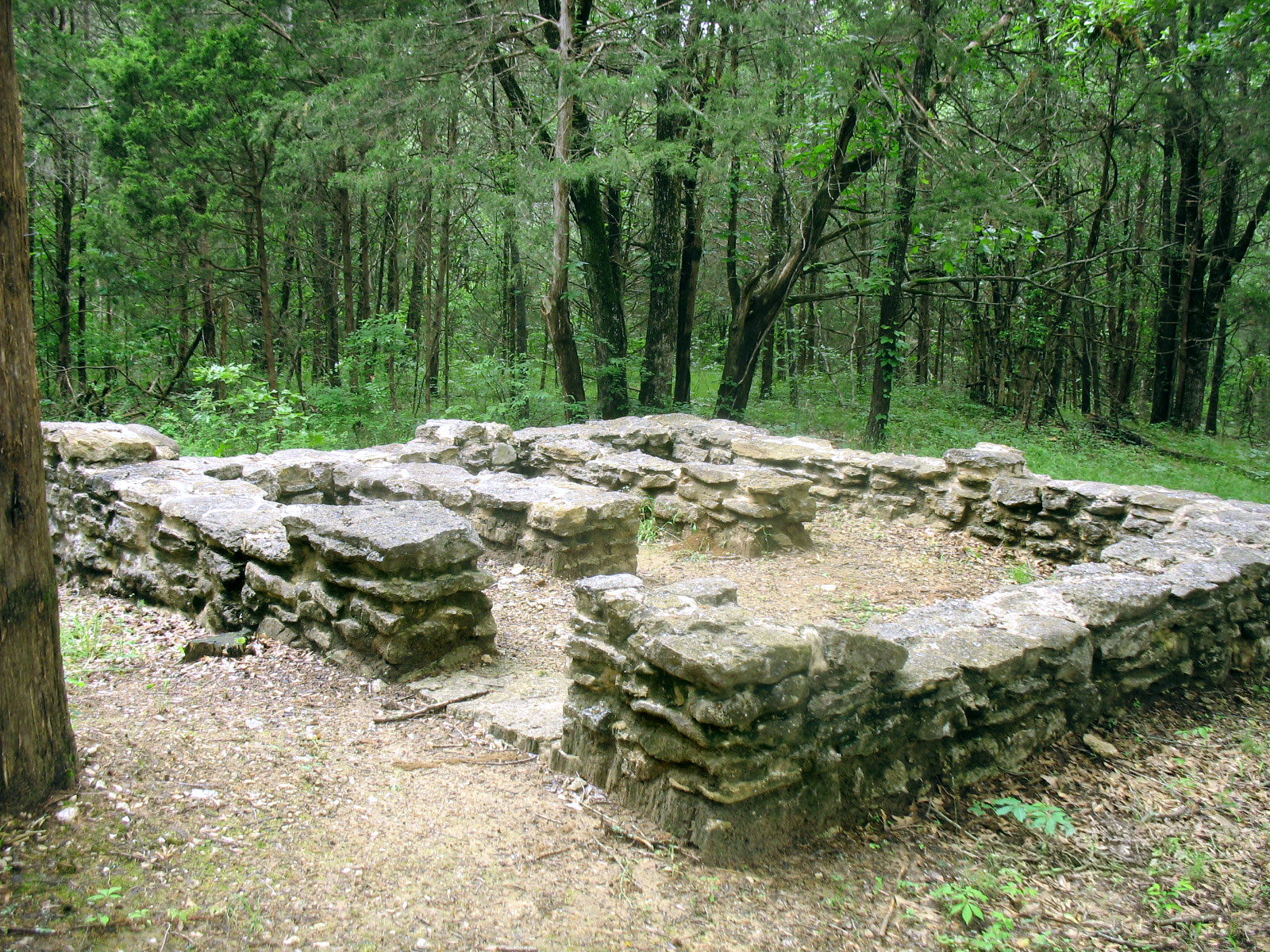
Ruins of the old Doaksville jail