Colonial Games and Music Trunk
The Colonial Games and Music trunk includes multiple interactive items for students. Students can play with the same toys and games with which colonial children played, as well as learn about colonial-era music, instruments, and dance with the items in this trunk. This trunk was made possible by the Oklahoma Foundation for Excellence.
Trunk Topics Request a Trunk Checkout Process
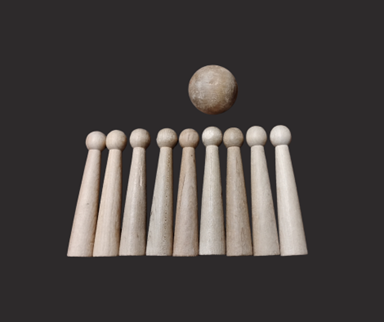
Tabletop Ninepins
Throughout the North American colonies, men and women of all classes enjoyed the popular pastime known as ninepins. The game proved to be an amusing distraction as early as 1636. Ninepins can be played with two or more players. The object of the game is to knock down as many of the wooden pins as possible with each roll of the ball. The first player to score exactly 31 points is the winner. To begin, the ninepins are set up at one end of a table or on a mark on the floor, in three rows of three, forming a diamond shape. The players set a mark at some distance from the pins where they will stand when rolling the ball. Each player bowls both balls, tallies the score, replaces the pins, and passes the balls to the next player. Players continue knocking down pins until someone scores 31 points and wins. If a player goes over 31 points, that player must continue to take turns until he or she knocks all the ninepins down in one turn, to win the game.
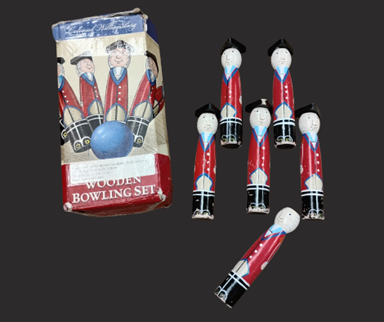
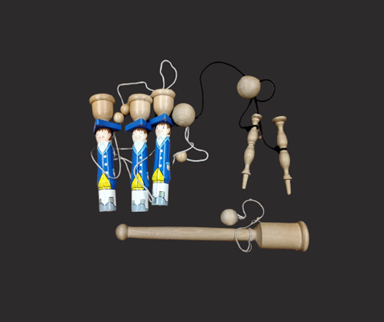
Soldier Wooden Bowling Set
This game is played similarly to ninepins. Players take turns rolling a ball to knock down the soldier pins. American children playing this game would have enjoyed knocking down the enemy “redcoats,” a nickname given to the British army because of their easily recognizable military jackets.
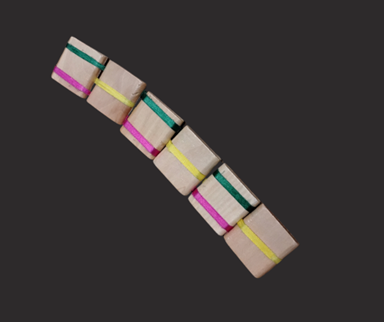
Jacob’s Ladder
The optical illusion created by the falling blocks gave the toy its name. Referencing Genesis 28:12, the toy is a representation of the ladder to heaven. This toy was used to teach religious lessons to colonial children.
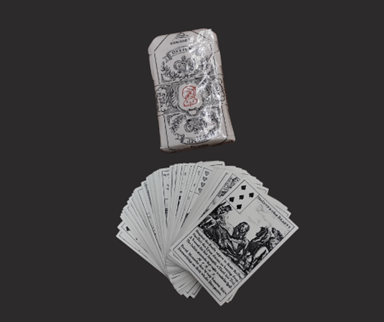
Cards
In a similar nature to dice, cards and card games often accompanied gambling. Gambling games plagued the camps of both the British and Continental armies. George Washington went so far as to issue a directive to “forbid playing at cards, or other games of chance.”
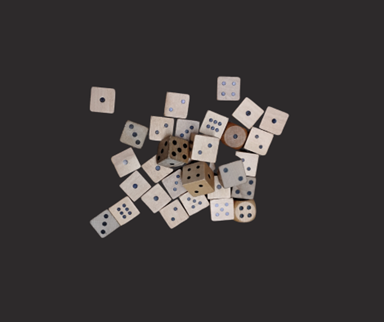
Wood Dice
Although many colonial Virginians may have considered dice too closely associated with gambling to be used with propriety in their homes, dice were nonetheless a common household item and could be purchased in stores.
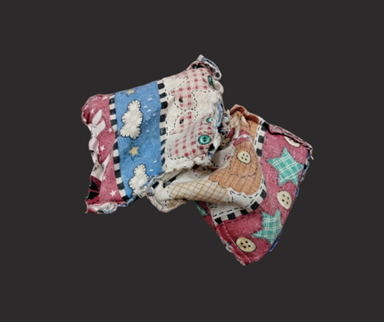
Bean Bags
Without electricity, colonial children spent much of their playtime outdoors. Children used what they had or could easily find to fashion toys. Rocks, scraps, and items like bean bags were commonly combined to make games like hoop toss, hot potato, and hit the cans.
Cup and Ball Toy and Bilbo Catcher
The object of the cup and ball game is to swing the wooden ball into the cup, which is not as easy as it seems. This toy was quite popular among children and adults alike in Europe throughout the period of the settlement of the American colonies. It was a favorite on the North American continent as well, as it could easily be made at home or purchased from a merchant.
The bilbo catcher (pictured, upper right) is a more advanced version of the ball and cup toy. The bilbo catcher combined the objective of the ball and cup with an added challenge of catching the ball with a smaller cup or the spindle point.
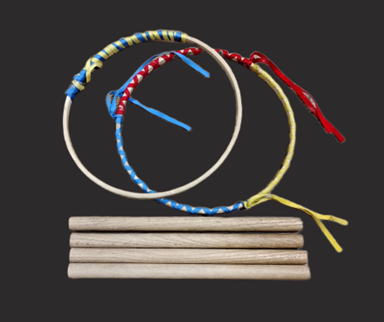
Game of Graces
This game was particularly popular among colonial women but was also played by boys. To play, two opponents stand across from each other, each with two wands. One player crosses his or her wands like scissors, with the hoop hanging near the point where the wands cross. One player would draw the crossed wands apart quickly to fling the hoop towards the other player. The receiving player then attempts to catch the airborne hoop with his or her wands and return it as quickly as possible. The game winner is the player who either catches the most hoops or misses the fewest hoops.
Snare Drums
In the 18th century, snare drums served as signal instruments for the infantry, relaying the commander's orders to soldiers in camp and on the field of battle. The steady rhythm of the drummers kept the soldiers’ minds off the tedious march. As was the custom, they are made of ash shells and hoops with calfskin heads and gut snares and are beaten by wooden mallets.
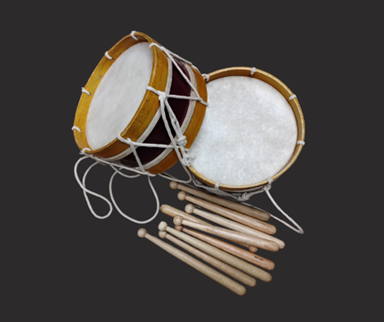
Tin Whistle
The tin whistle, or penny whistle, is a travel-friendly, high-pitched flute with six finger holes. Similar to a recorder, it was a popular and inexpensive instrument listed on 18th-century store inventories.
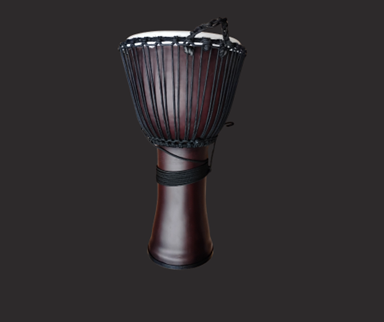
Djembe Drum
Originating in West Africa, the djembe might have been introduced to the North American colonies through the slave trade. Music and playing instruments were a big part of Western African culture. Drum circles, often featuring the djembe primarily, were largely social and community-building events in West African civilizations.
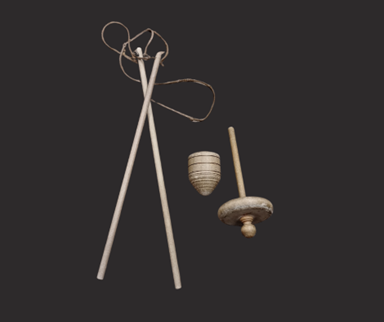
Whip Top
The whip top is one of the oldest versions of the toy top. This version thrived in the North American colonies because the necessary components were easy to construct. The whip could be made with any branch or stick with a varying number of leather or buckskin lashes. Start the top by hand, and then use the lash to maintain the top’s speed. Once the technique is mastered, races or games similar to king of the hill can be played.
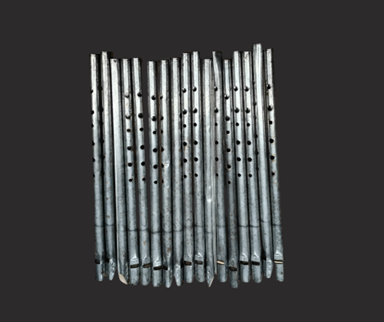
Fife
These small, high-pitched instruments originated in medieval Europe and are often used in fife and drum corps, military units, and marching bands. They are usually made of wood, but can also be made of plastic or metal. The metal bands on these fifes are called reinforcing bands, or ferrules, which are commonly used to protect military or marching fifes from damage. Fifes and fife and drum bands were important during the American Revolution because the loud, piercing sound of a fife could be heard up to three miles away, even over the sound of artillery fire. Fifes are also commonly used in folk music traditions to accompany lively dance tunes.
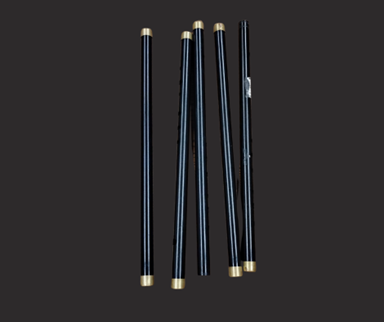
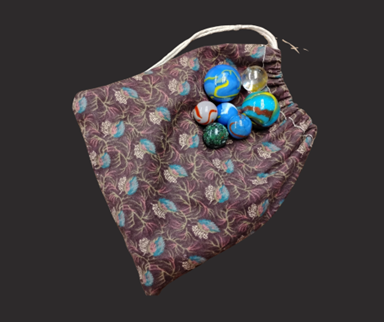
Bag of Marbles
Colonial children enjoyed playing marbles. To play, one person rolled or shot their marbles into another player’s marbles in order to knock them out of a designated area. The player who knocked the marbles out of the area got to keep those marbles. Players took turns being the shooter. The winner is the person who collected the most marbles. Colonial marbles were made out of baked or glazed clay, stones, nut shells, or glass.
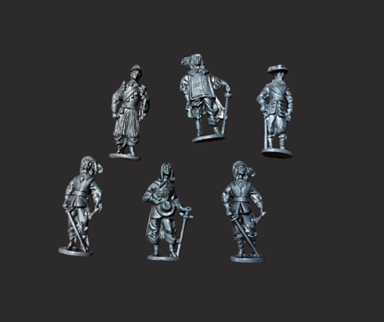
Metal Figurines
Colonial children played with scale models of heroes and villains, which were similar to today’s action figures. Made of wood, metal, or even scraps of tossed goods, figurines miniaturized the people of the time. Soldiers and other military themes were particularly popular.
Hoop and Stick
Hoop and stick has been a popular children’s game for several centuries, dating back to the 15th century in England. The primary goal of the game is to keep the hoop upright and rolling using only the stick. Once the method is mastered, several other games can be created. Navigating obstacle courses, throwing things through a rolling hoop, and hoop battles were common games that colonial children played. Hoops were typically constructed from wood, but metal barrel bands were often used, as they accomplished the same goal and were easy to find.