Colonial Life Trunk
This trunk contains clothing, tools, and personal belongings that would have been part of daily life during the colonial era.
Trunk Topics Request a Trunk Checkout Process
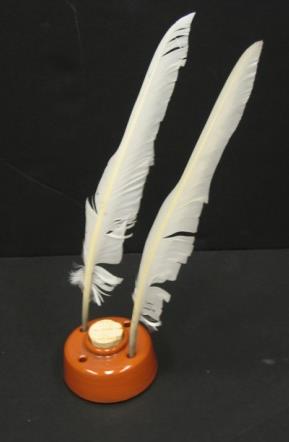
Goose Quill Pen
From the Mayflower Compact to the Declaration of Independence, the famous documents of America were all created with the same simple quill pen that colonists used to write letters and keep diaries.
Important documents such as the Magna Carta and the United States Constitution have proven the quill pen to be a powerful tool in the hands of artists and statesmen.
Soldier’s Haversack
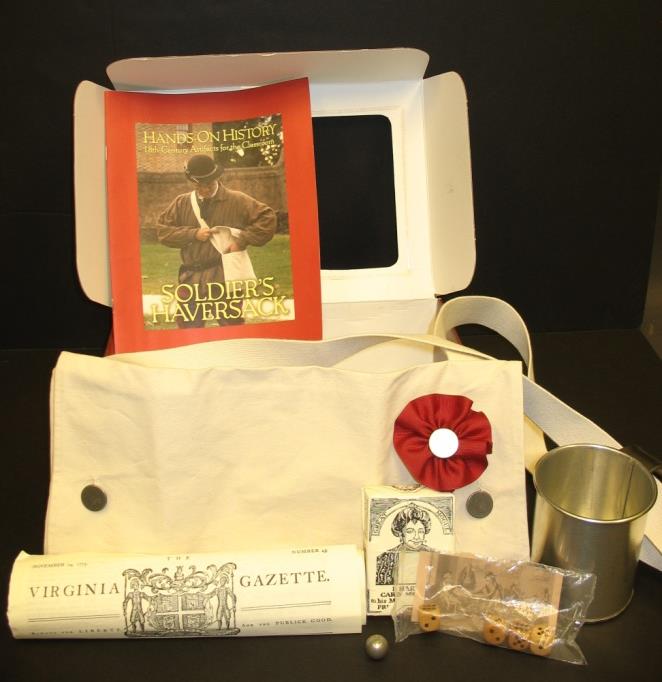
Soldiers in the colonial period carried a haversack to hold their personal items while in the field. By using and interpreting the artifacts found in the haversacks, we can better understand the life of the colonial soldier.
This set includes:
- Booklet
- Haversack
- Virginia Gazette
- Dice (4)
- Musket Ball
- Tin Cup
- Cockade
- Playing Cards
Lady’s Pocket
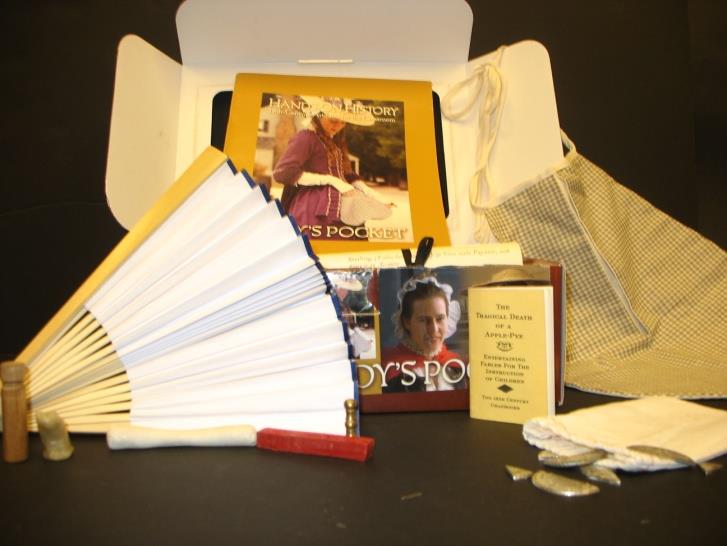
Colonial women generally wore more layers of clothing than is customary today. Due to the fashion of the time, women’s clothing did not have built-in pockets. Instead, women wore pockets that were tied around the waist. The items a woman carried depended on her social status, the time of day, and the task she was undertaking.
This set includes:
- Booklet
- Wax animal
- Needle case
- Pieces of eight
- Fan
- Wig curler
- Wax and seal
- Fable book
- Receipt
Colonial Paper Currency
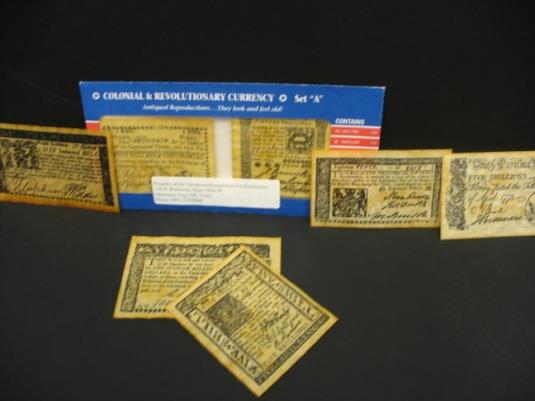
The standard currency of the colonial period was hard currency. Hard currency was preferred due to its intrinsic value as a precious metal. Coined silver and gold, however, was hard to come by in the American colonies. To overcome this hurdle, colonies began printing paper currency. The values varied by colony, and each colony had its own system. The widespread use and printing of paper money would rapidly depreciate the value, creating a need for a unified and standardized financial system.
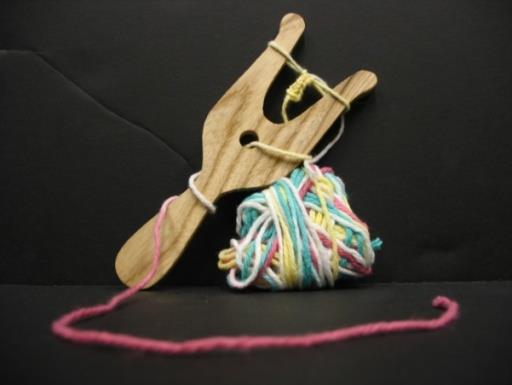
Lucet
The lucet is a simple tool used in colonial times to make cords and drawstrings. They were commonly found in sewing kits. The technique involved graceful hand motions that perpetuated the colonial feminine style of grace and craftiness.
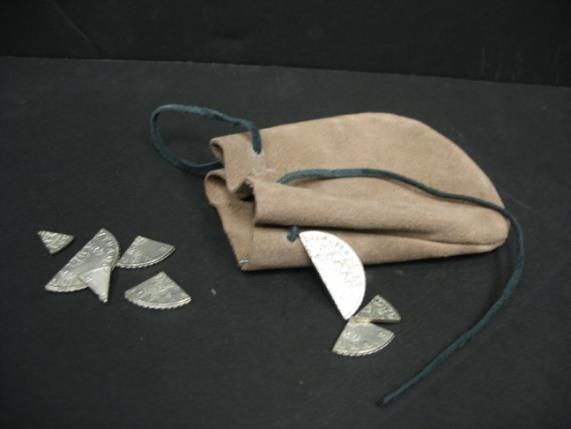
Pieces of Eight
Also known as the Spanish milled dollar or peso, pieces of eight were the most commonly available hard currency in the American colonies. England had forbidden the colonies from coining their own money, so colonists used what was available. Pieces of eight were particularly useful because they could be broken into eight pieces known as bits. The ability to break down hard currency into smaller denominations helped stimulate commerce.
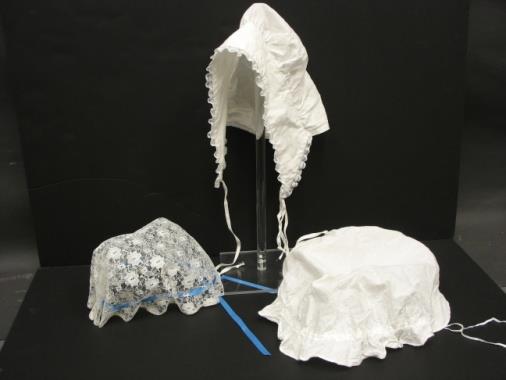
Ladies’ Caps
Ladies’ caps served several functions depending on the circumstances under which they were worn. Caps could be worn to alleviate heat and sweat from the sun, to keep hair dry, or as a fashion statement.
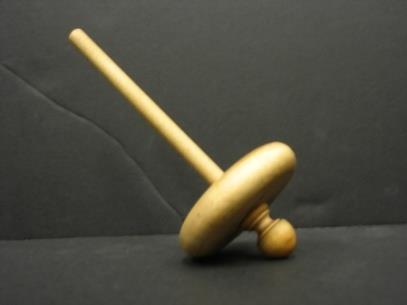
Drop Spindle
The drop spindle was used to spin yarn and thread. Most colonists only owned a few pairs of clothing, so it was vital that they be properly maintained. The job of clothing repair was often taken up by colonial women. The drop spindle greatly increased the speed of thread and yarn production.
Musket Ball
Unfortunately, war was a constant threat to many colonists. Between the French and Indian War, skirmishes with American Indians, and ultimately the Revolution, muskets and musket balls were commonplace in many colonial homes and in daily life. Musket balls of the period were made out of lead, a soft metal that would flatten on impact, leaving grisly exit wounds. This replica musket ball is lead-free.
Enslaved Person’s Bag
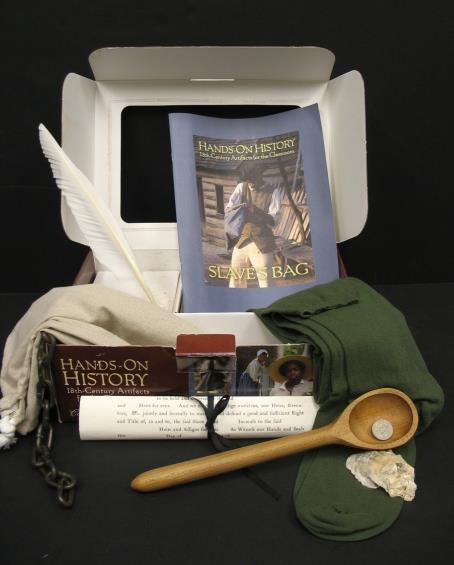
Enslaved people owned very little, but some were allowed to own a few things to create positive work incentives. Things that enslaved people owned could be bought, traded, or sold at their discretion, granting them a modicum of freedom. Sometimes, enslaved people carried their belongings in a simple sack like this one.
This set includes:
- Feather
- Booklet
- Bag
- Bill of sale
- Oyster shell
- Wooden spoon
- Flint and steel
- Piece of chain
- Pewter button
- Stockings (pair)
Stamp and Wax
Before the time of e-mails, even before adhesive envelopes, colonial correspondence was carried through letters. Hot wax would be poured onto the envelope flaps, sealing the envelope. Before the wax cooled, the stamp would be pressed into it, leaving a signature design that might also indicate who sent the message. Kings and government officials would often have stamps of their crest to grant importance to the letter.
Spyglass and Map
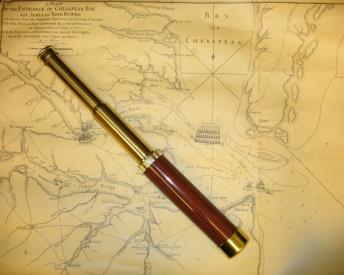
The spyglass was used throughout the Revolutionary War as a critical espionage tool by both the Americans and the British, but the patriots were particularly dedicated to procuring intelligence. The spyglass allowed for the safe monitoring of enemy troops and their movements, keeping the Continental Army up-to-date with the enemy’s tactics. The included map is of the Battle of Yorktown.
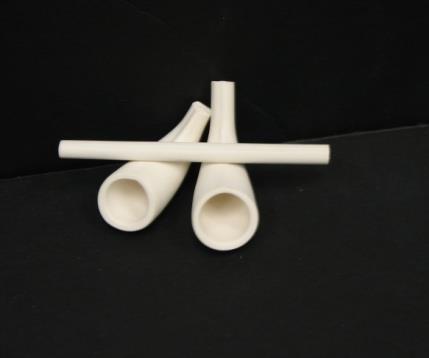
Broken Pipes
Tobacco was Virginia’s greatest cash crop. Tobacco became a common luxury good after the habit of smoking swept through England. The habit also found an audience in the American colonies. Colonists made their own pipes in order to smoke and the practice was common among all social classes. Soldiers would often tie their fragile pipes to their hats to keep them from breaking.
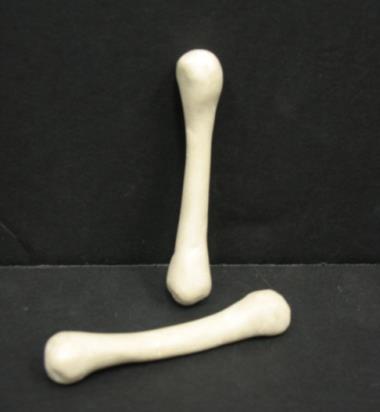
Wig Curlers
In colonial times, white powdered wigs were commonly worn by men of influence. George Washington, Alexander Hamilton, John Adams, and several others wore these wigs. To get the characteristic curls, colonists would use clay or bone curlers. The curls would then be applied to a heat source or sugar water to fix the curl in place.
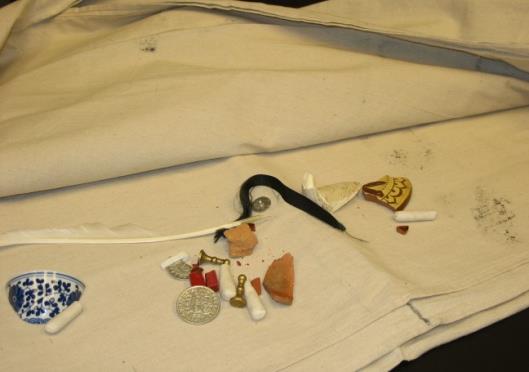
Archaeology Activity
This activity is designed to give the student an idea of how archaeology teaches us about the past. A canvas allows for the activity to be done indoors. A bag of broken pieces and small artifacts is included in the trunk. Students have the opportunity to uncover an artifact, analyze the artifact, and determine its function and significance. Please be careful, as some of the broken pieces might be sharp!
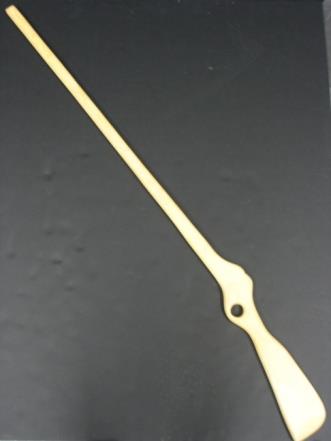
Wooden Muskets
These wooden muskets are roughly the size of the muskets used during the colonial period. Wooden muskets are a safe way to add authenticity to mock drills or battle reenactments.
Books and Media
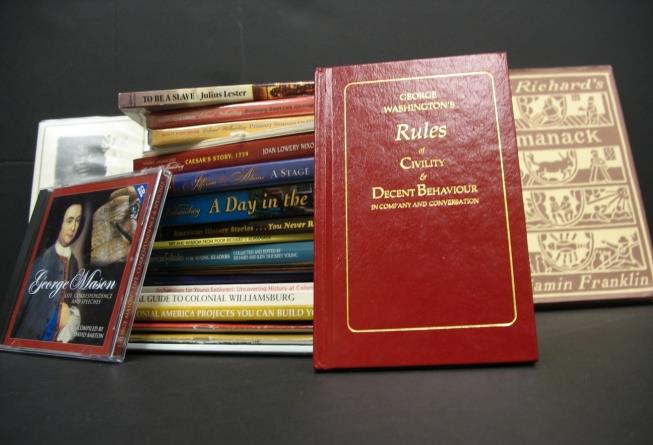
In the trunk are several books and videos that share information concerning life in Colonial America. Included are George Washington’s Rules of Civility & Decent Behavior, Benjamin Franklin’s Poor Richard‘s Almanack, and African-American Folktales.
Extras in Trunk
- Hands-on History: American Indian Bandolier Bag booklet
- Hands-on History: Lady’s Pocket booklet
- Deck of cards
- Modern dolls wearing colonial garb