Explorers Trunk
The Oklahoma Explorers trunk has a variety of hands-on items, activities, and materials for classroom use.
Trunk Topics Request a Trunk Checkout Process
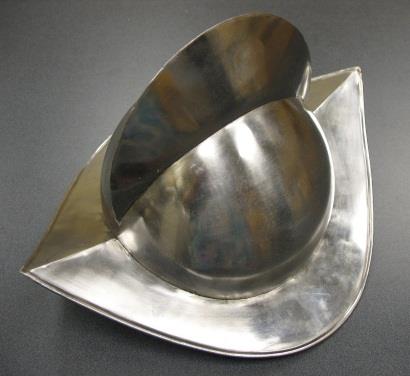
Spanish Conquistador Helmet
Explorers, soldiers, colonists, and Spanish conquistadors journeyed throughout the New World between the 15th and 19th centuries. Accustomed to the plains and rocky areas of Spain, conquistadors wore armor and helmets designed for the European climate and battle. This is a comb morion helmet, developed in the 16th century for kings, nobles, and soldiers. Although it is probably of Spanish origin, the helmet also appeared in Hungary, England, Sweden, and Italy.
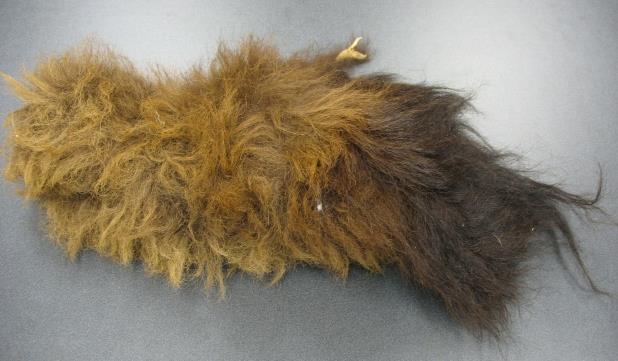
Bison Hide Strip
Most explorers utilized bison hide in their expeditions. Some used the meat for food and the hide for warmth. Others, especially the French, hunted bison for trade and helped build a complex fur trade.
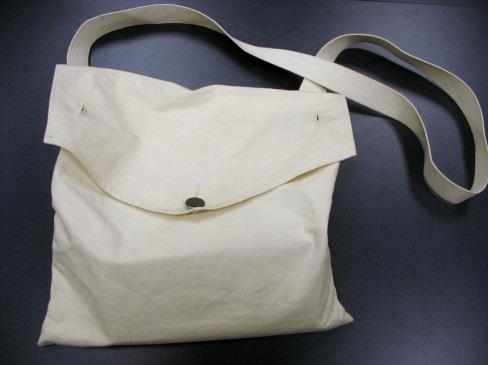
Haversack
Many different kinds of people used these cotton canvas bags throughout the 18th century. Explorers used haversacks to carry food and personal items. The haversacks were typically 15 inches by 15 inches, with a shoulder strap.
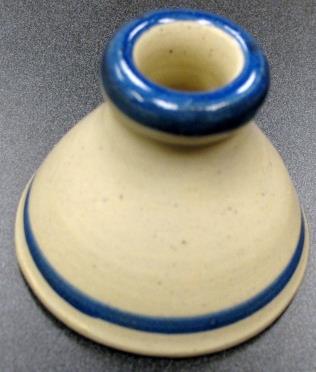
Stoneware Inkwell
Used since the Middle Ages, inkwells provided a convenient place to store ink for quill pens. The tip of the pen was dipped into the inkwell. Inkwells disappeared around 1884 with the invention of the fountain pen, and became almost unknown after the 1930s. Explorers carried writing supplies to record their discoveries and to keep journals.
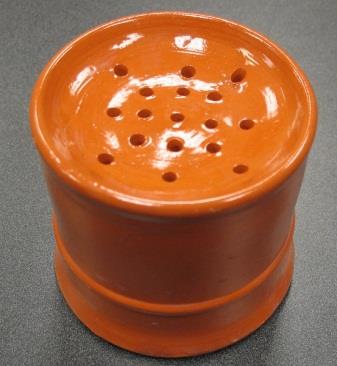
Pounce Paper Sander
The redware paper sander was used throughout the time of the quill pen and completed the explorer’s writing kit. It contained sand, or pounce, which the writer would pour upon freshly written ink to dry it more quickly. The sander would be very useful for the explorer, who frequently moved to different locations and did not have time to let the ink dry.
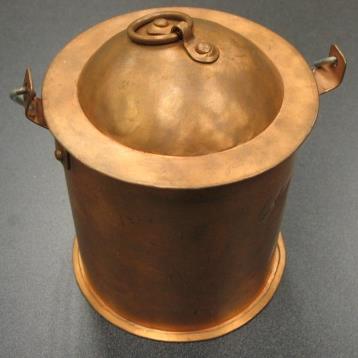
Copper Pot
Many people used copper pots for cooking during the 16th through the 19th centuries. Explorers used these pots to boil water and cook food during expeditions. The pots were durable enough to survive the journey. This pot holds about one quart, and it is safe to use over a fire.
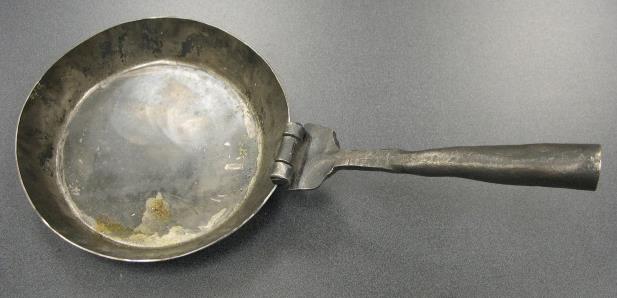
Skillet
This 18th-century hand-forged iron skillet featured a folding handle for easy storage. It weighed only 1.5 pounds and enabled travelers to cook meat from hunting.
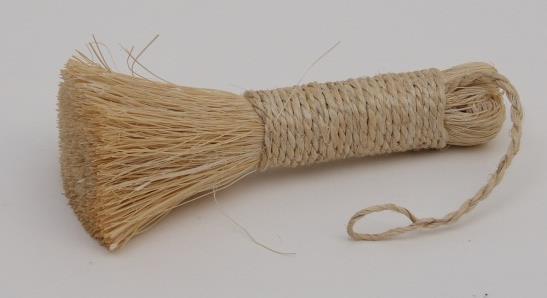
Pot Scrubber
Made from natural broom straw, the pot scrubber enabled explorers to clean their dishes in nearby streams or water sources. Because cleaning opportunities were rare, the dishes often remained dirty for long periods, necessitating a stiff scrubber to clean them.
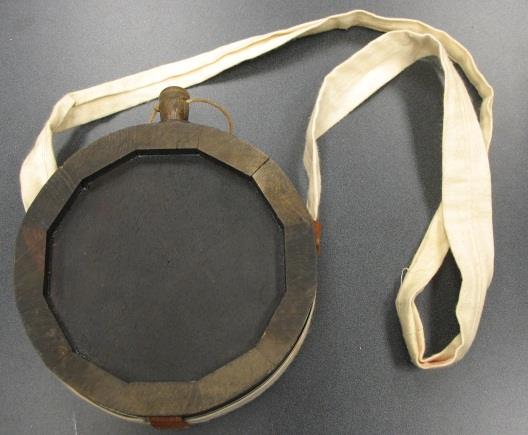
Canteen
Used for holding water, the canteen began as a gourd or animal hide sewn together and later evolved into a metal container. Essential for travel, canteens often meant life or death for the explorer due to primitive or nonexistent maps and unknown locations of water sources.
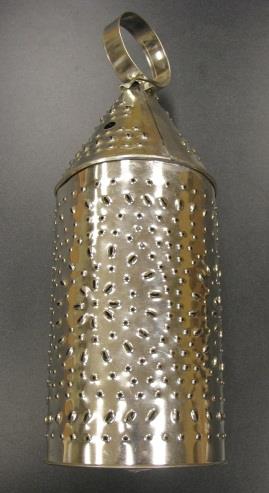
Lantern
The candle lantern was used for hundreds of years and provided explorers with their only source of light at night. The body design kept rain out and absorbed the heat from the handle, so it did not get too hot to hold. The holes are large enough to let light through but small enough to keep the wind from blowing out the candle.
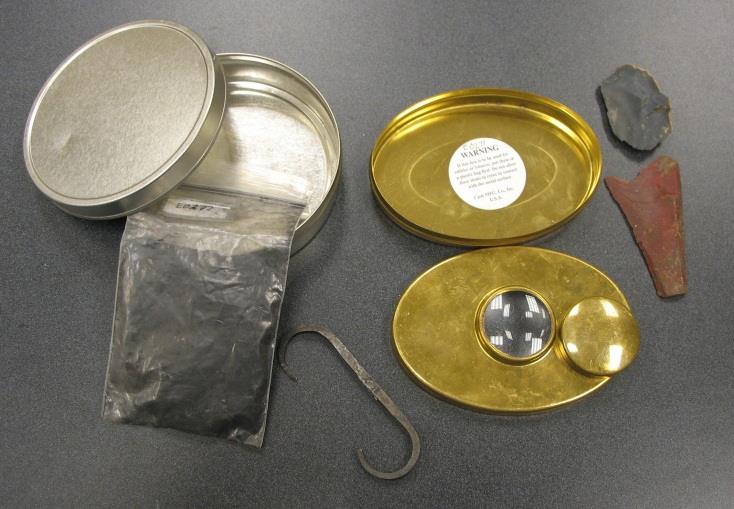
Fire-Starting Kit
A must-have for all explorers, the fire-starting kit included a steel striker, flints, char cloth, and tinder. Travelers also often used tobacco tins to keep their tobacco dry and fresh while exploring. To start a fire, they would use the striker and flint to create sparks, which would catch on the char cloth and tinder. They would then place the flammable materials in the firewood to catch the larger pieces on fire.
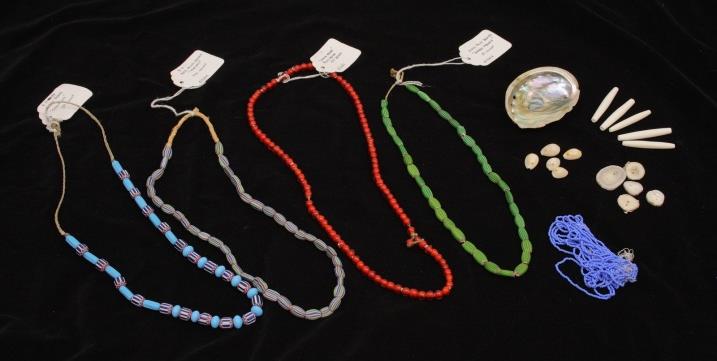
Trade Beads
Glass beads originated in Egypt and Eastern Mesopotamia around 3500 BC. Their popularity grew by the 16th century, after early Spanish explorers traded with American Indians. Before European contact, American Indians used beads made of turquoise, bone, and shell. The native inhabitants and explorers traded different types of beads, making them a large part of the fur trade.
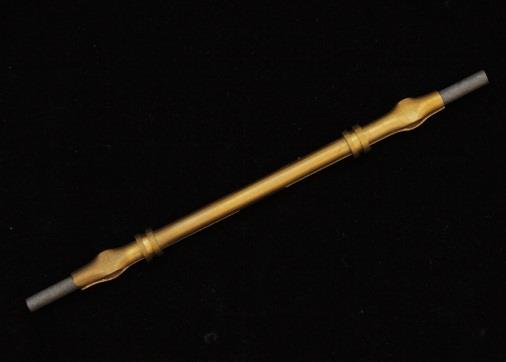
Pencil
After the discovery of graphite in England, people began to make pencils around 1564. Originally, writers held bare graphite, but in the 1600s, the pencil featured wood or metal encasements. This style of pencil, also called a porta crayon, has a brass casing and dates to 1680. Explorers most often used pencils to sketch the new landscapes and animals encountered on their expeditions.
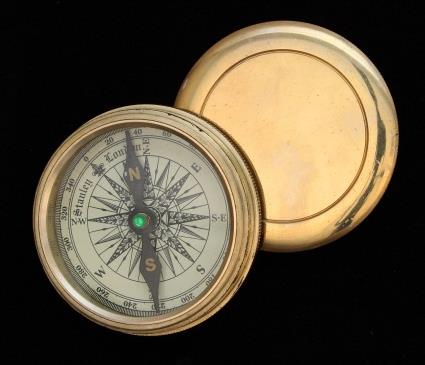
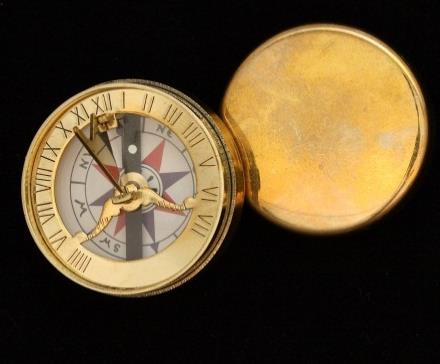
Compasses
Around 220 BC, Chinese fortunetellers used stones composed of iron oxide to align the arrows in a north-south direction. They would then use the stones for their fortune-telling boards. The first needles, made of the same stones, always pointed south. Magnetized needles replaced iron oxide stones in China around the eighth century AD and became popular among ship navigators during AD 850–1050. These solid brass compasses replicate what the explorers used in the 18th and 19th centuries. One compass also has a folding sundial for telling the time.
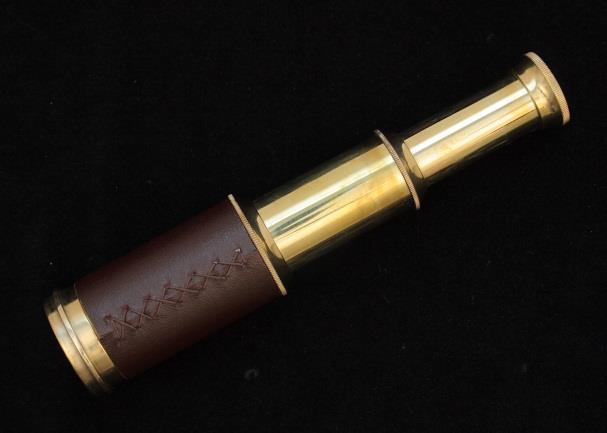
Brass Telescope
The telescope allowed explorers to navigate from ships or see vast amounts of landscape from the ground. Although the optics are not up to today’s standards, the telescope was top-of-the-line technology in its day.
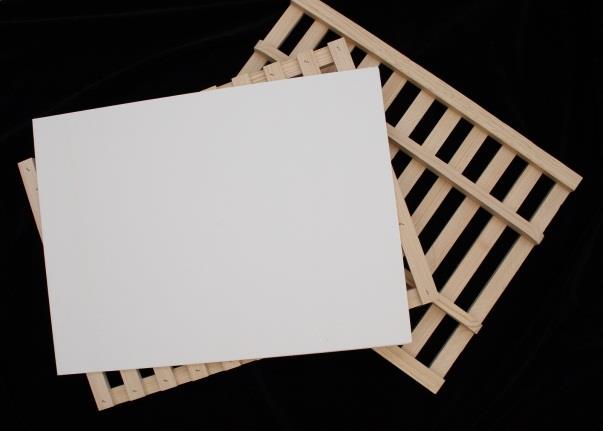
Plant Press
In exploring new territory, the explorer also encountered new plant species. They carried plant presses to collect the unknown specimens and take them back to the east for further study. The press consisted of a wooden frame for support, space between the slats for ventilation, and thick paper to absorb moisture. Straps and buckles hold the frames tightly together during the drying process. Pressing plants would quickly extract moisture and preserve the plant’s scientific integrity. This allowed specimens to be stored for long periods of time and studied at a later date.
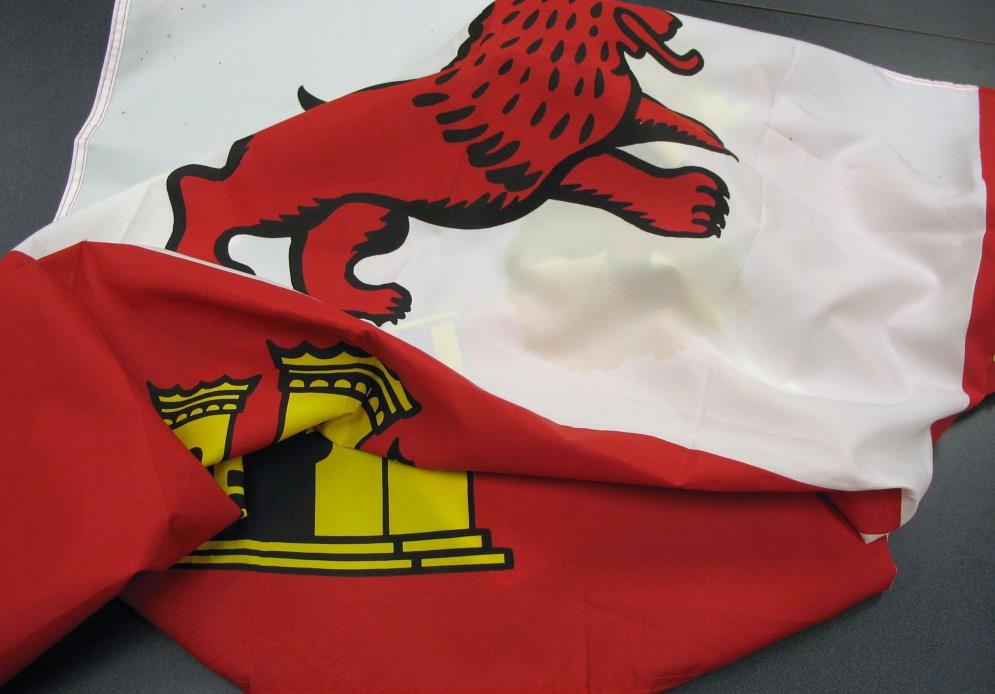
Royal Standard of Spain, ca. 1513
A Spanish explorer named Francisco Vázquez de Coronado brought this flag to what is now Oklahoma in 1541. The red-and-white quartered flag has a golden castle on the red and a red lion on the white. The castle and lion represented the royal houses of Castile and Leon, from which the King of Spain descended.
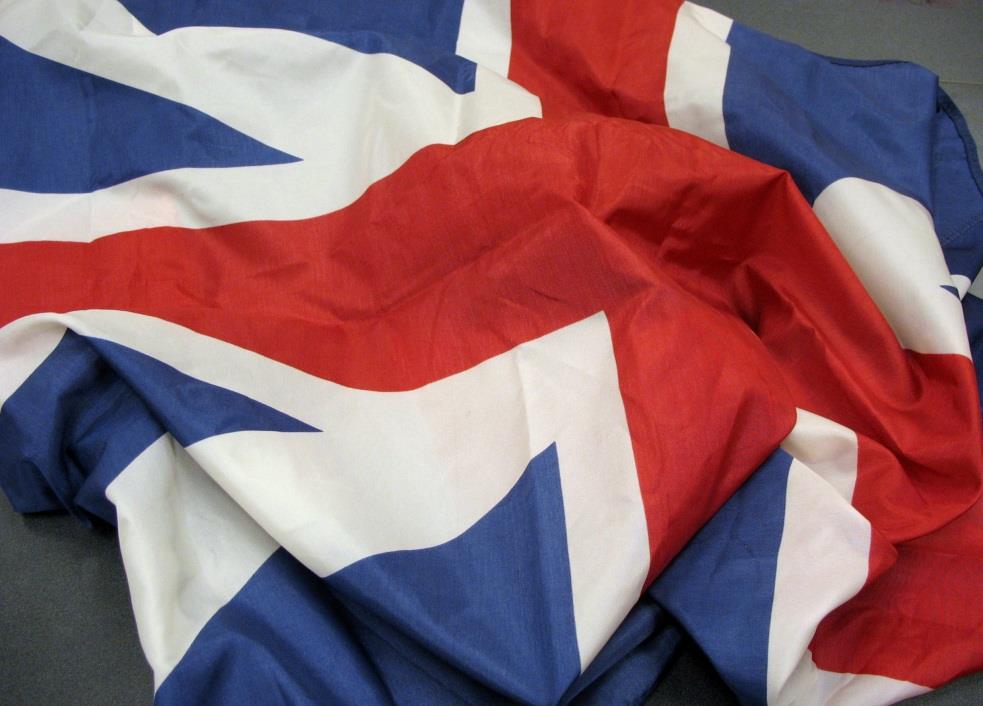
The Great Union flag of Great Britain
This flag flew over Oklahoma beginning in 1663 when King Charles II gave his friends a wide strip of country called Carolina, which stretched from the Atlantic to the Pacific.
French Flag
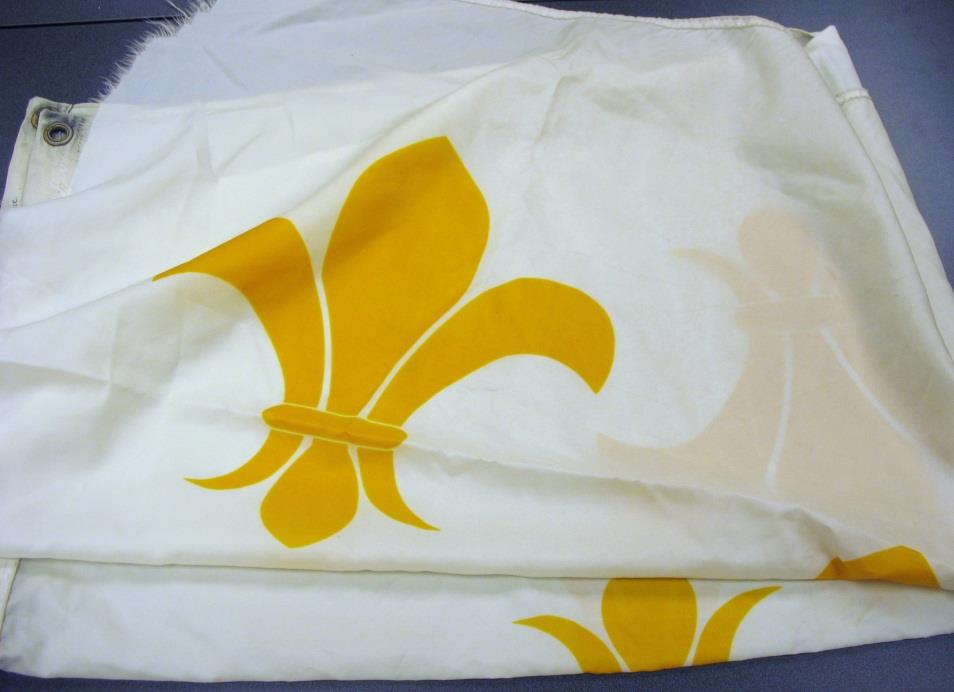
Jean-Baptiste Bérnard de la Harpe brought this flag to the region in 1719, during a visit to an American Indian village on the Arkansas River near Haskell in Muskogee County. However, French claims to this area date back to 1682, when René-Robert Cavelier, Sieur de La Salle, claimed all the country drained by the Mississippi River and its branches in the name of France. The flag shows three gold fleur-de-lis staggered on a field of blue.
Napoleonic French Flag
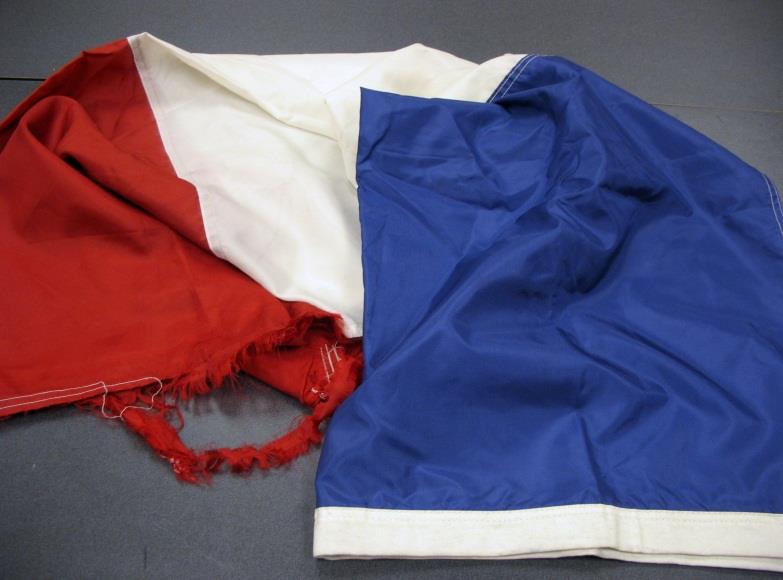
This flag represented Napoleonic France. It flew over Oklahoma after Spain gave the Louisiana Province to France under the terms of the Treaty of San Ildefonso. Spain had previously acquired the territory in 1763 via the Treaty of Paris.
United States Flag, 1794
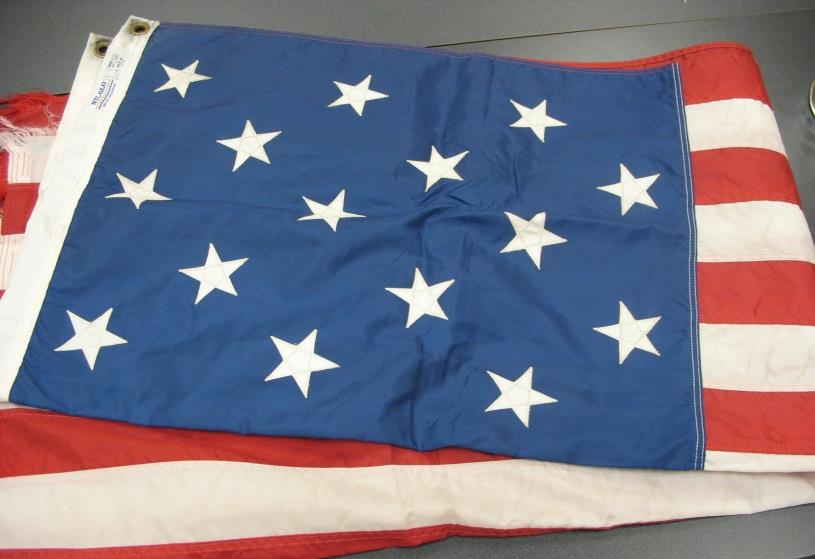
This flag flew over what is now Oklahoma after the United States obtained the territory from France in the Louisiana Purchase. Congress established this flag in 1794. The flag’s 15 stars and stripes represent the 15 states of the Union.
United States Flag, 1818
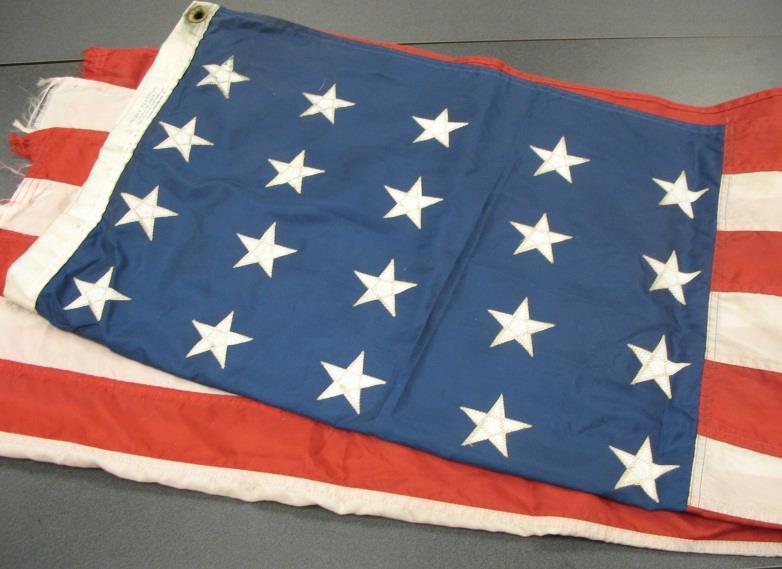
Congress passed a law on April 4, 1818, and changed the United States flag’s design. They reduced the number of stripes to 13 to represent the 13 colonies. The flag has 20 stars that represent the 20 states in the Union.