Artwork
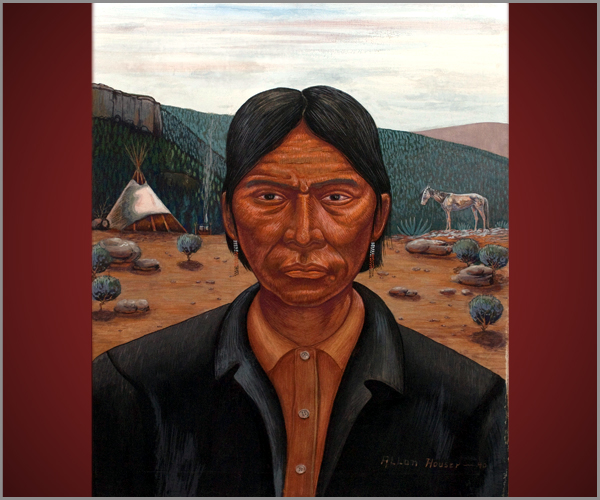
Allan Houser
tempera on canvas, 1940
The Apache Kid
The Apache Kid has special meaning to the Houser family. This painting is based on an old black-and-white photograph in Allan’s collection of the Apache Kid, a real person. He was born around 1860, a member of the Aravaipa Apache Band. He grew up in a mining camp close to the San Carlos reservation, working various jobs and earning his future name, “the Apache Kid.” He later became a scout in the US Army. After his father was killed, he, along with several other scouts, exacted revenge. They were AWOL for a few days and when they decided to come in, armed Apaches surrounded them and a shooting fracas began. The Kid was sentenced to seven years in prison. En route to the prison, he escaped into the mountains. He was blamed for every crime committed in the territory. Allan never sold this painting; he kept it, usually hung in the living room. Loan courtesy of Mrs. Anna Marie Houser
Read transcript
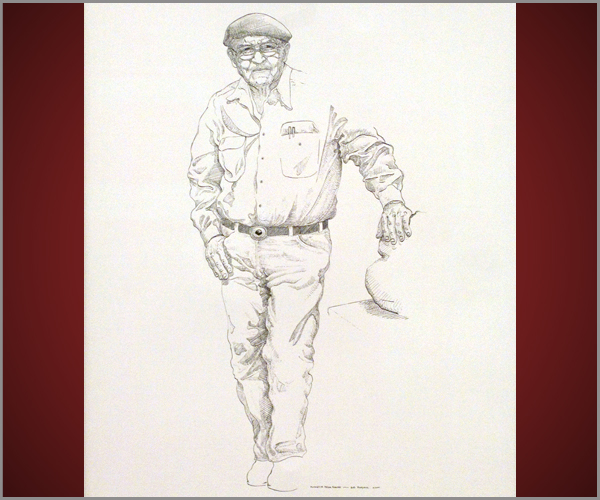
Bob Haozous
drawing, pen and ink on paper, 2001
Sketch of Allan Houser
Created by Bob Haozous, this pen-and-ink drawing of his father was exhibited at the Winter Olympics at Salt Lake City, Utah, in 2002. Loan courtesy of the Allan Houser Foundation
Watercolors
These watercolors by Allan are untitled. During the 1950s, Allan and his family moved to Brigham City, Utah, where Allan taught art at the Intermountain Indian School. During this time he experimented in watercolors and oils as well as illustrating several children’s books. Of the seven watercolors featured in this exhibit, the majority of them are landscape themes, especially the western states of Utah and New Mexico. The two watercolors that feature horses are a reminder of Houser’s early life growing up on the family farm in which horses were a daily part of the landscape. His work in watercolor spanned nearly a decade.
Read transcript
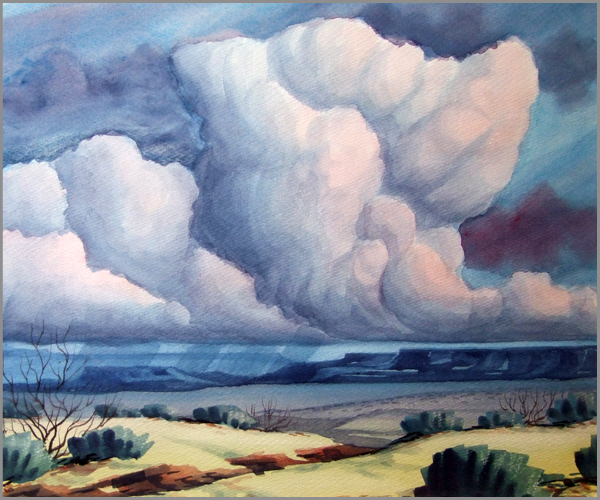
Watercolors 1
Allan Houser
watercolor on paper, 1950s
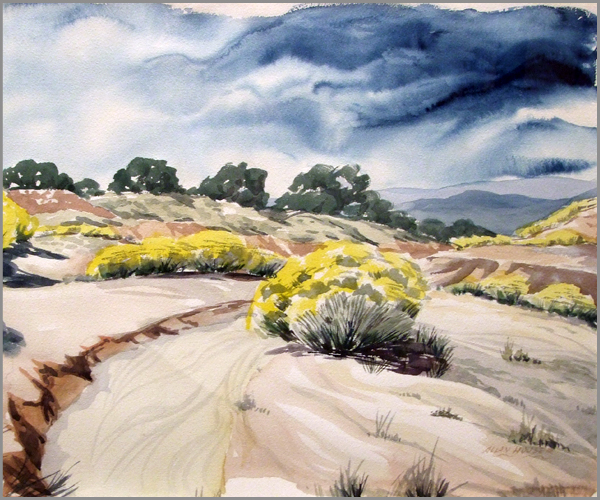
Watercolors 2
Allan Houser
watercolor on paper, 1950s
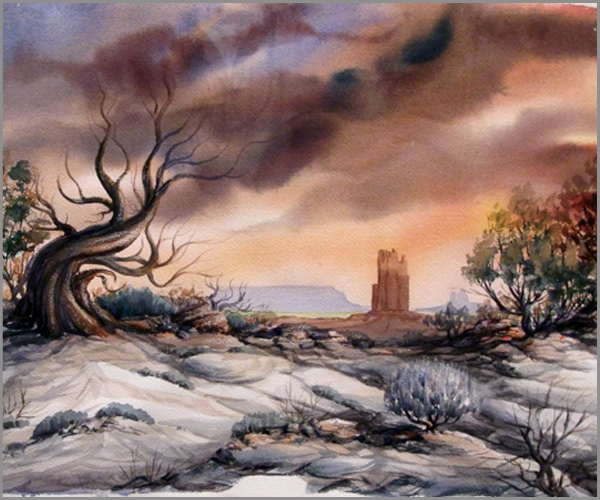
Watercolors 3
Allan Houser
watercolor on paper, 1950s
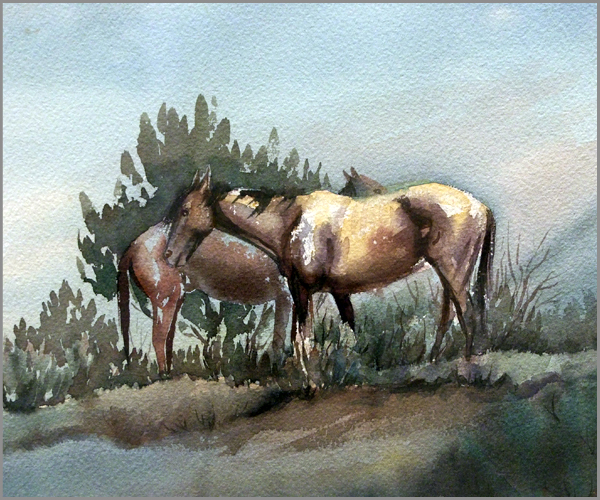
Watercolors 4
Allan Houser
watercolor on paper, 1950s
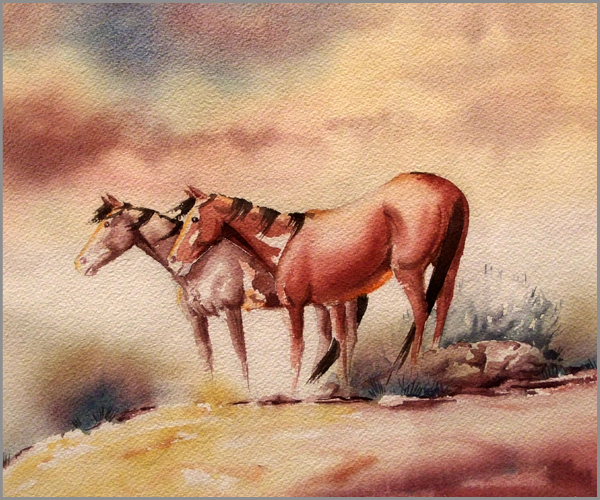
Watercolors 5
Allan Houser
watercolor on paper, 1950s
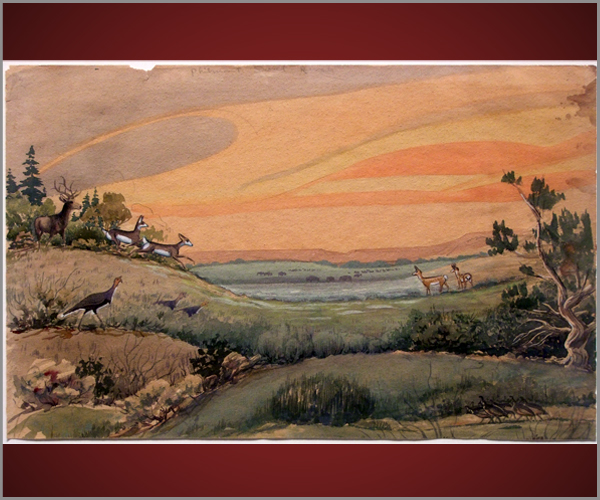
Watercolors 6
Allan Houser
watercolor on paper, 1950s
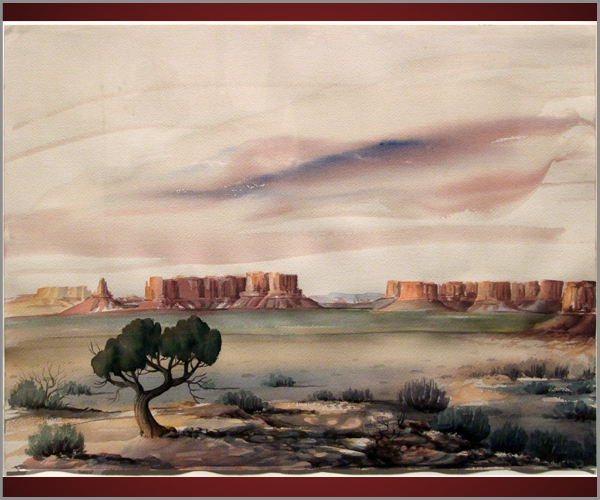
Watercolors 7
Allan Houser
watercolor on paper, 1950s