Historical Marker Program
Search Results
Your search returned 9 results.
Beecham Cemetery
Canadian CountyLocation: on cemetery grounds, one mile east of US-81 on E0940 Rd
Coordinates: 35.653303, -97.941581
Material: Granite
Sponsor(s): Beecham Cemetery Association
Topics: Settlement Patterns; Territorial Period, 1861–1907
The cemetery was established by the Beecham family in 1891 to provide burial space for pioneers of the area. Many graves are marked only by crude stones, their inscriptions eroded by a century of exposure to the elements. In 1972, the Beecham Cemetery Association collected funds to provide for perpetual care for the one-acre cemetery.
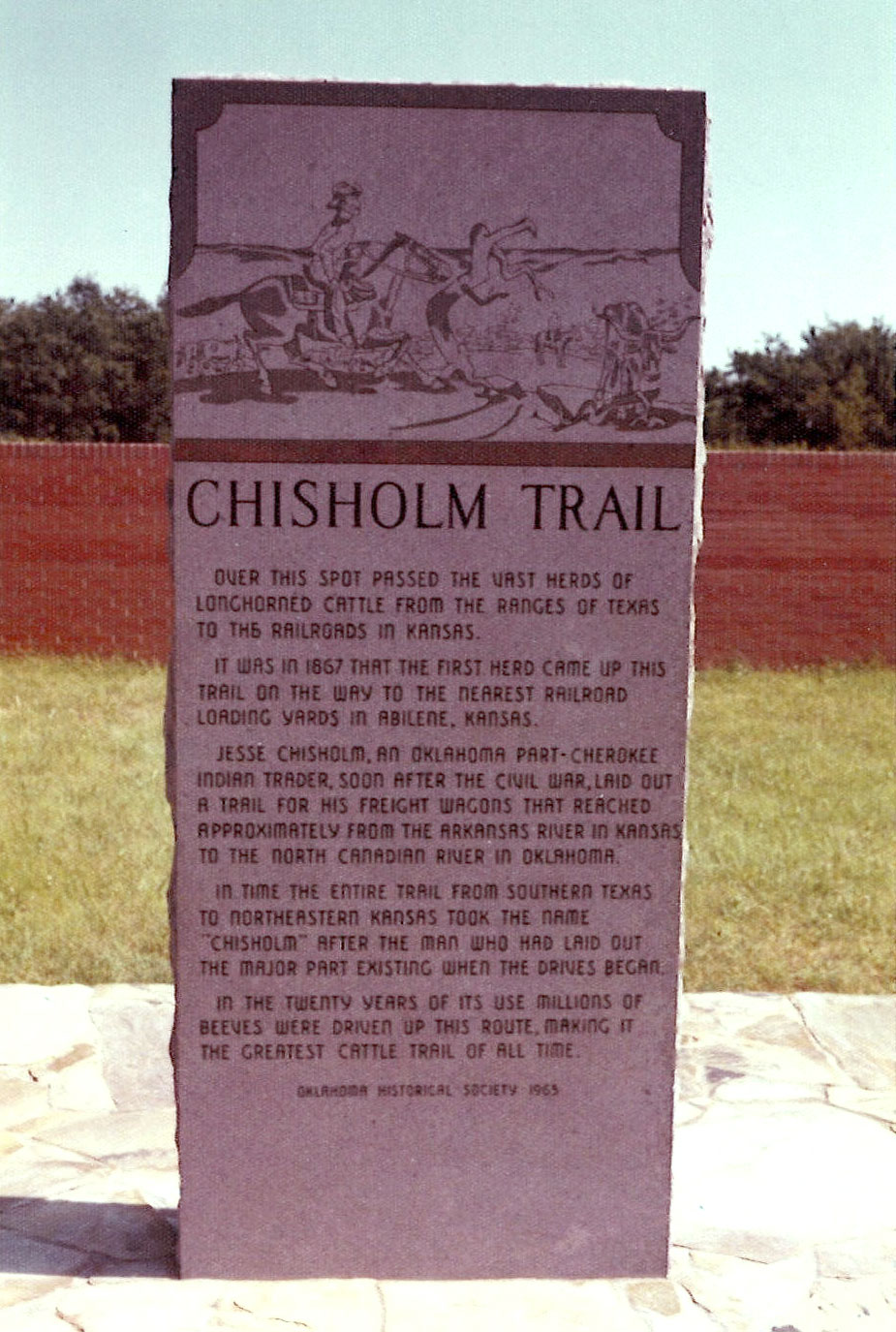
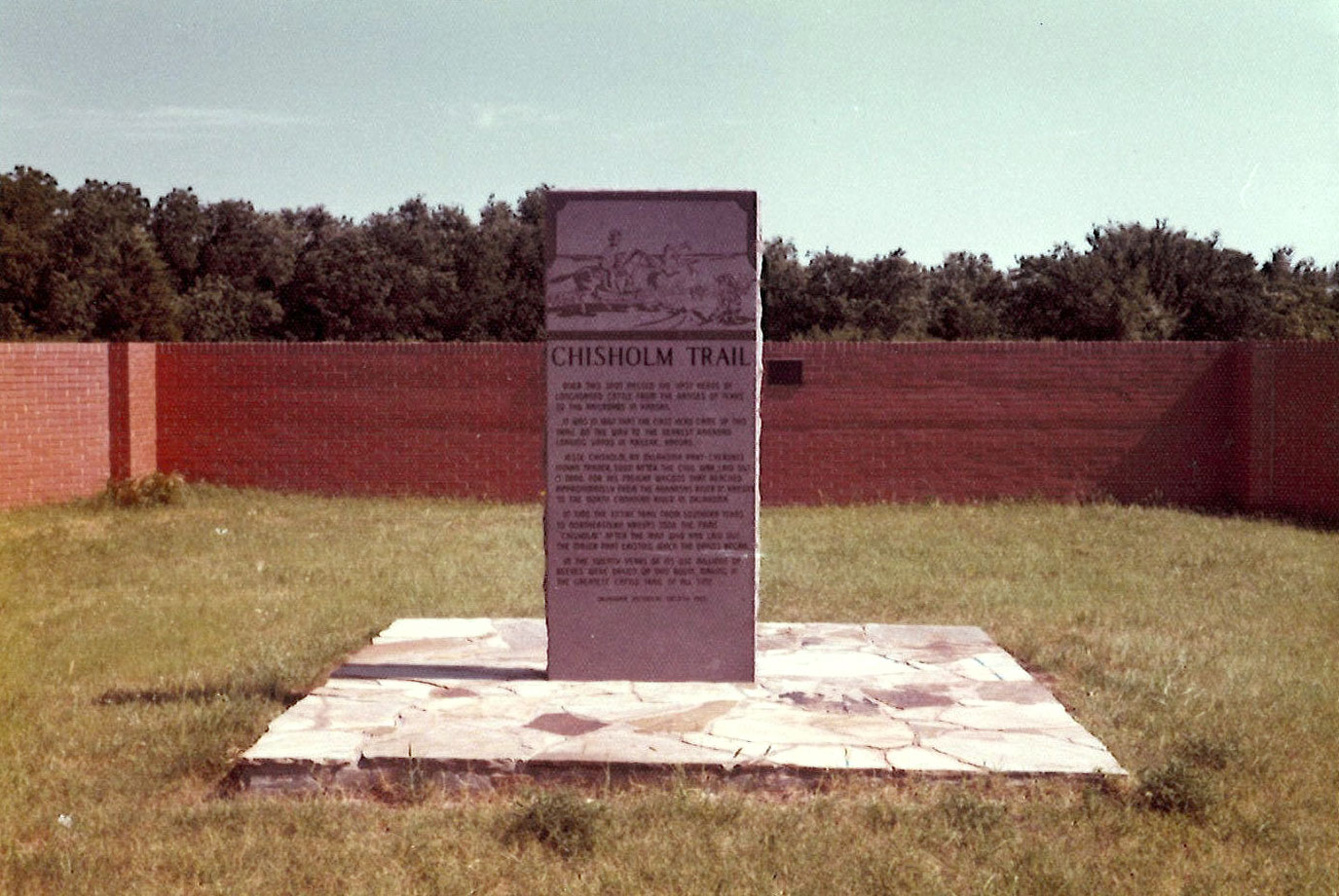
Chisholm Trail
Canadian CountyLocation: on grounds of Mollie Spencer Farm in Yukon
Coordinates: 35.497068, -97.759740
Material: Granite
Sponsor(s): Oklahoma Historical Society
Topics: Ranching; Territorial Period, 1861–1907; Transportation
A pioneer merchant, trader, and explorer, Jesse Chisholm, a Cherokee, established a trail through western Indian Territory before the Civil War. Texas cattlemen used the trail until the late 1880s to move millions of cattle to northern markets. The trail ran from Montague County, Texas, to Abilene, Kansas.
View image
View image
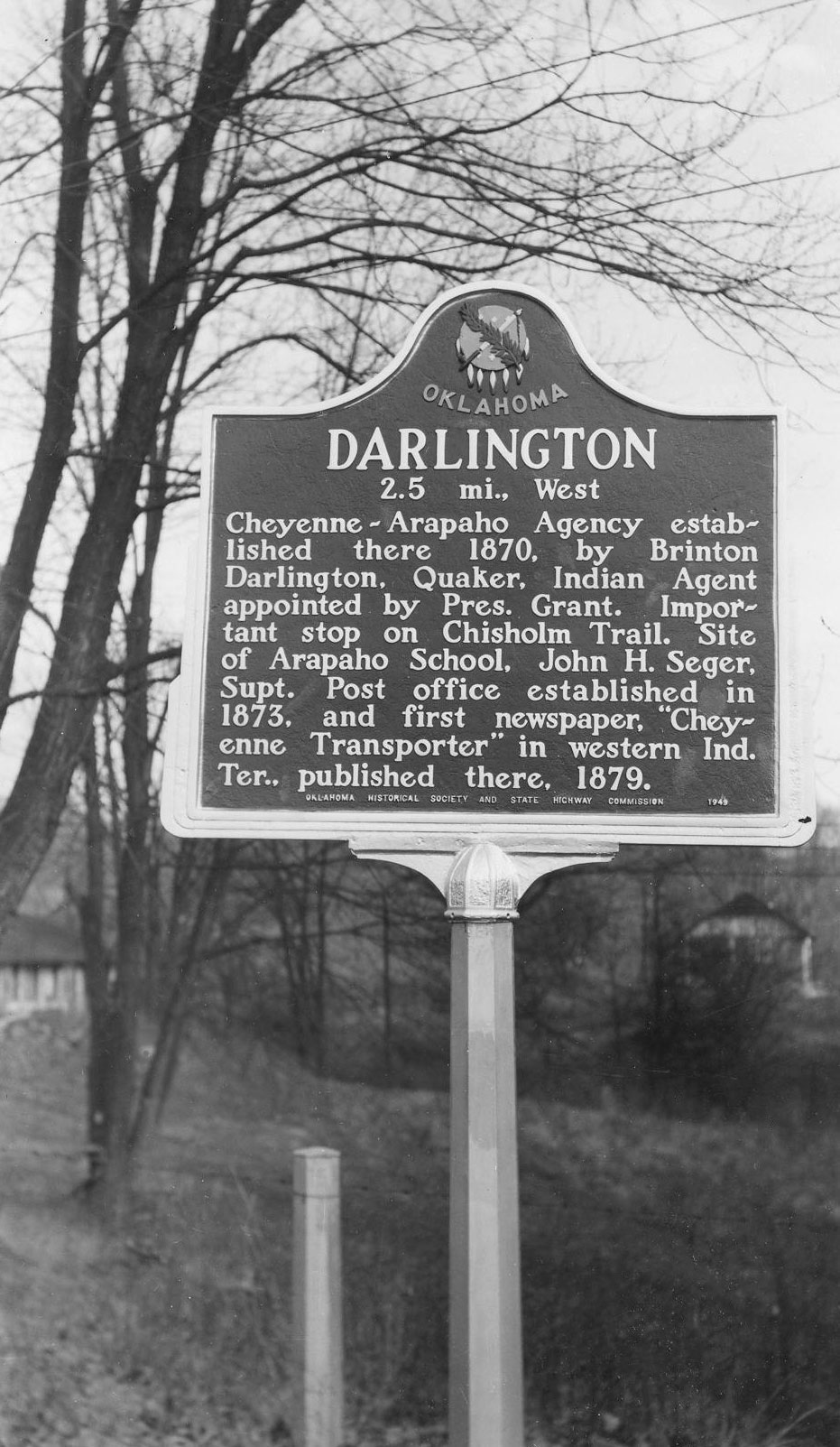
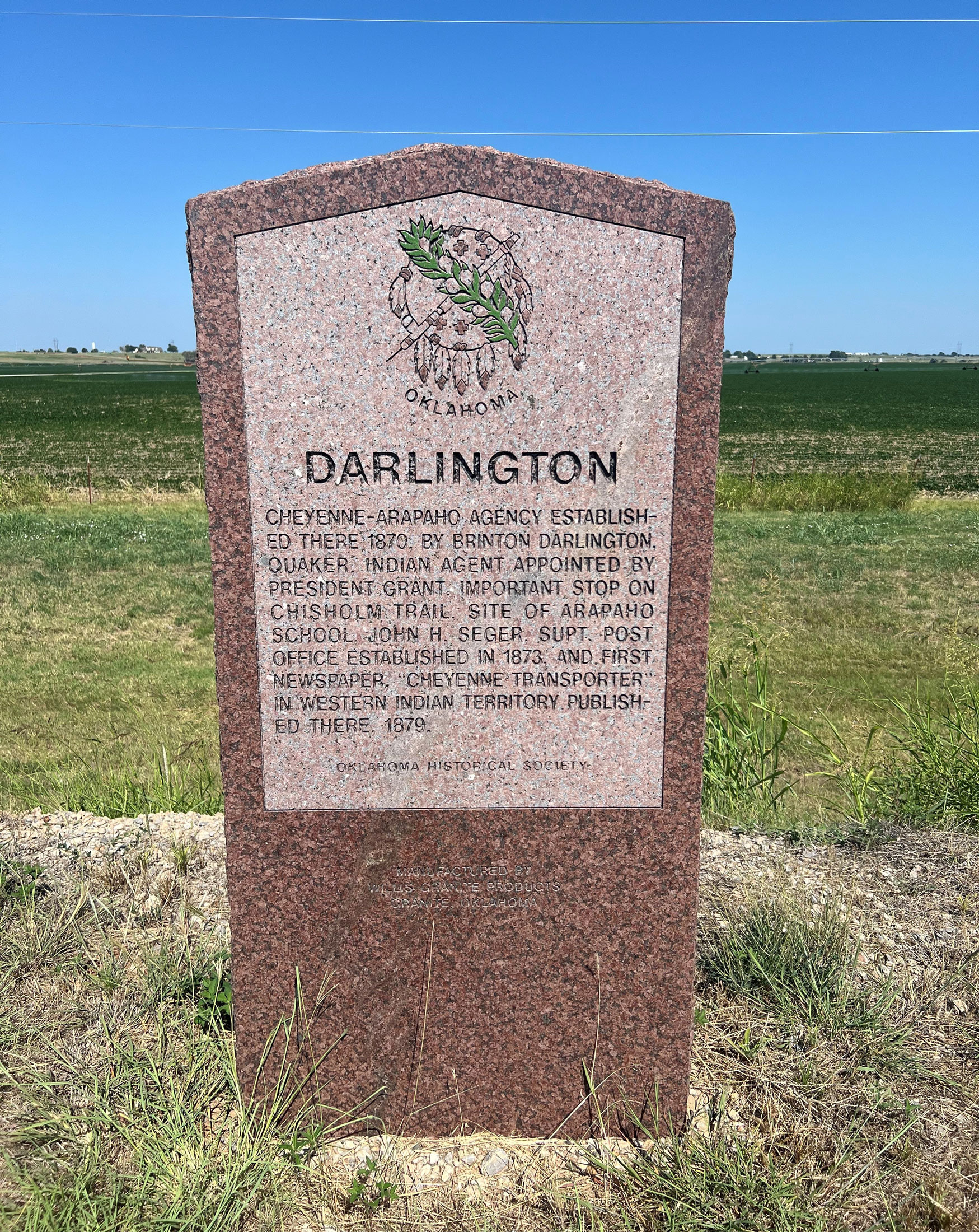
Darlington
Canadian CountyLocation: on US-81, three miles north of El Reno
Coordinates: 35.586301, -97.958908
Material: Granite
Sponsor(s): Oklahoma Historical Society
Topics: American Indians; Government; Mass Communication; Territorial Period, 1861–1907
An important stop on the Chisholm Trail, the Cheyenne-Arapaho Agency was established at Darlington in 1870. The settlement is named for Brinton Darlington, a Quaker who was appointed Indian agent by President U. S. Grant. A post office opened in Darlington in 1873 and the first newspaper published in western Indian Territory, the Cheyenne Transporter, was printed in the community in 1879.
View image
View image
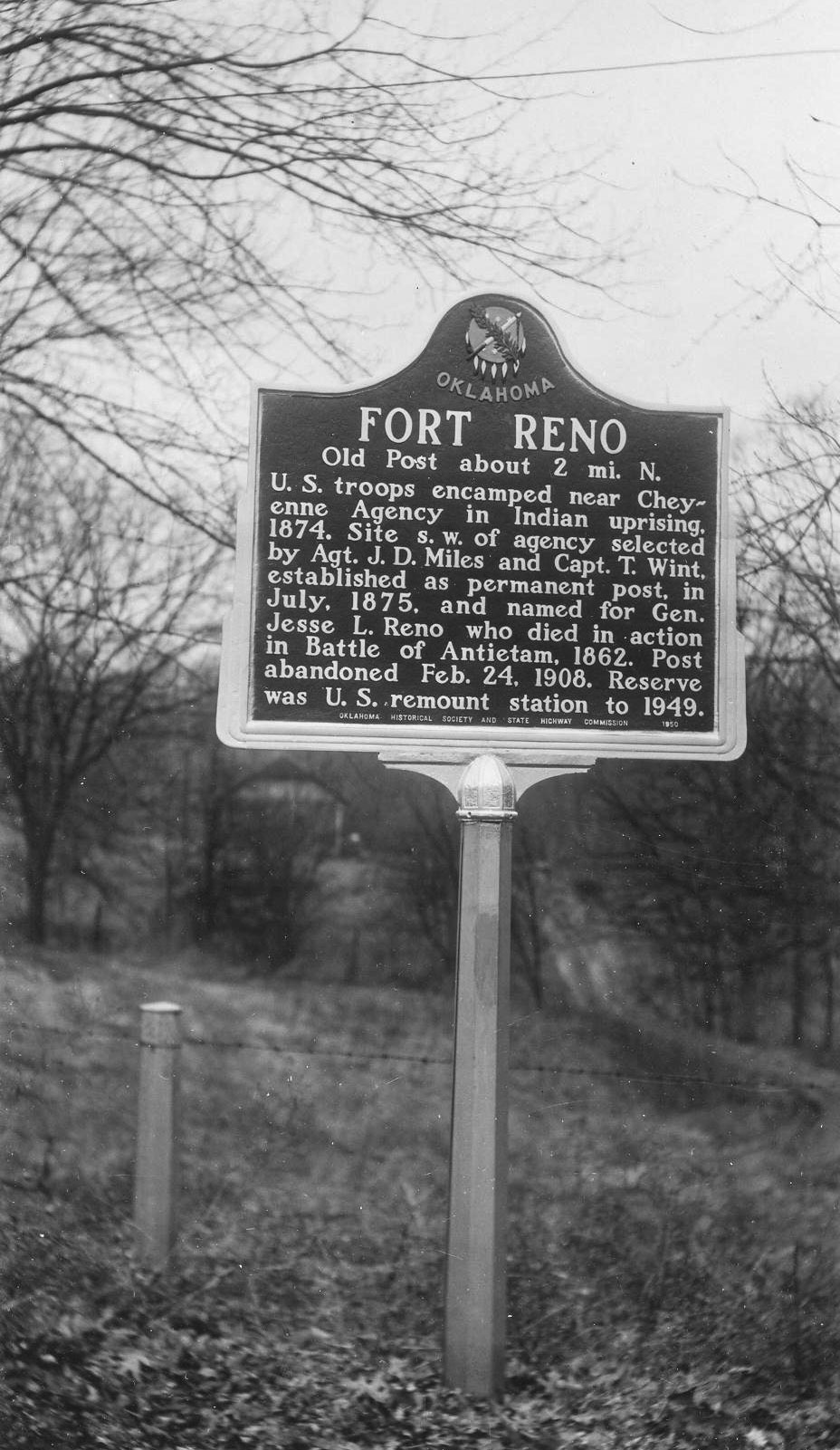
Fort Reno
Canadian CountyLocation: on OK-66 near entrance to Fort Reno
Coordinates: 35.537365, -98.026123
Material: Aluminum
Sponsor(s): Oklahoma Historical Society and the Oklahoma Department of Transportation
Topics: American Indians; Government; Military; Territorial Period, 1861–1907
Named for General Jesse L. Reno, who died in action during the Civil War, Fort Reno was established to protect and police the Cheyenne-Arapaho Agency. Initially a temporary camp to protect the agency during the Red River War of 1874, the site was expanded and designated Fort Reno on July 15, 1875. The post was abandoned as an active military installation in February 1908, but it served as a remount station for the US Army until 1948.
View image

View image
Fort Reno
Canadian CountyLocation: on southeast corner of parade grounds at Fort Reno
Coordinates: 35.561489, -98.033795
Material: Granite
Sponsor(s): El Reno Chapter, Daughters of the American Revolution
Topics: Government; Military; Territorial Period, 1861–1907
Named for General Jesse L. Reno, who died in action during the Civil War, Fort Reno was established to protect and police the Cheyenne-Arapaho Agency. Initially a temporary camp to protect the agency during the Red River War of 1874, the site was expanded and designated Fort Reno on July 15, 1875. The post was abandoned as an active military installation in February 1908, but it served as a remount station for the US Army until 1948.
Gift of John E. Kirkpatrick
Canadian CountyLocation: on grounds of Mollie Spencer Farm in Yukon
Coordinates: 35.497066, -97.759739
Material: Other (Bronze plaque)
Sponsor(s): Oklahoma Historical Society
Topics: Early Statehood, 1907–1941; Family/Household
This marker to commemorate the Chisholm Trail was erected on the land of John E. Kirkpatrick that was given to him by his grandmother, Mrs. Lewis Mortimer Spencer, on February 13, 1908. His grandfather, Lewis M. Spencer, was one of Yukon’s founders.
Piedmont
Canadian CountyLocation: at intersection of Monroe Avenue NW and NW First Street in Piedmont
Coordinates: 35.642217, -97.746544
Material: Aluminum
Sponsor(s): Piedmont Historical Society Museum
Topics: Early Statehood, 1907–1941; Modern Period, 1982–Present; Urban Development
The townsite of Piedmont was originally homesteaded by James Dean during the opening of the Unassigned Lands on April 22, 1889. After his death in 1899, Dean’s farm became the property of doctor and attorney E. H. Long, who platted the Piedmont townsite in 1903. The town was incorporated in 1909. A farming community of only 120 people in 1950, Piedmont became a city in 1984 and was among the fastest growing communities in Oklahoma by the early 21st century, with a population of over 7,000 by 2020.
Run of ’89 West Boundary
Canadian CountyLocation: on grounds of Canadian County Museum in El Reno
Coordinates: 35.530971, -97.958525
Material: Aluminum
Sponsor(s): Oklahoma Historical Society and the Oklahoma Department of Transportation
Topics: Land Openings; Territorial Period, 1861–1907
At the opening of the “Old Oklahoma,” April 22, 1889, this was the west line for the run starting at noon. Prairies and hills in the 2-million-acre tract, east, were peopled by tens of thousands. Homes were planted and tent cities sprang up before nightfall.

View image

View image
Yukon Czech Hall (Bohemian Hall)
Canadian CountyLocation: 205 North Czech Hall Road in Yukon
Coordinates: 35.468757, -97.742769
Material: Granite
Sponsor(s): LaVerne Benda
Topics: Early Statehood, 1907–1941; Ethnic Diversity; Recreational/Service
Bohemian Hall was established in 1899 by early Czech settlers. The original structure was replaced by the present building in 1925. Bohemian Hall is the focal point of Czech social and musical functions in Oklahoma, including traditional weddings, reunions, and family gatherings. Czech plays were performed until 1940. Czech dances have been held on Saturday nights since 1925.
(Page 1 of 1)
Marker Search
Use quotation marks to search for an exact phrase.
Browse by County
Adair County
Alfalfa County
Atoka County
Beaver County
Beckham County
Blaine County
Bryan County
Caddo County
Canadian County
Carter County
Cherokee County
Choctaw County
Cimarron County
Cleveland County
Comanche County
Cotton County
Craig County
Creek County
Custer County
Delaware County
Dewey County
Ellis County
Garfield County
Garvin County
Grady County
Grant County
Greer County
Harmon County
Harper County
Haskell County
Hughes County
Jackson County
Jefferson County
Johnston County
Kay County
Kingfisher County
Kiowa County
Latimer County
Le Flore County
Lincoln County
Logan County
Love County
Major County
Marshall County
Mayes County
McClain County
McCurtain County
McIntosh County
Murray County
Muskogee County
Noble County
Nowata County
Okfuskee County
Oklahoma County
Okmulgee County
Osage County
Ottawa County
Pawnee County
Payne County
Pittsburg County
Pontotoc County
Pottawatomie County
Pushmataha County
Roger Mills County
Rogers County
Seminole County
Sequoyah County
Stephens County
Texas County
Tillman County
Tulsa County
Wagoner County
Washington County
Washita County
Woods County
Woodward County
To find out more about the Oklahoma Historical Society Historical Marker Program or how to submit an application, please visit the Historical Marker Program page.
Missing or Damaged Markers
Please use our online form to report missing or damaged historical markers.
Report Missing or Damaged Markers
Contact Us
If you have questions, please contact:
Matthew Pearce
Oklahoma Historical Society
800 Nazih Zuhdi Drive
Oklahoma City, OK 73105
405-522-8659
[email protected]